
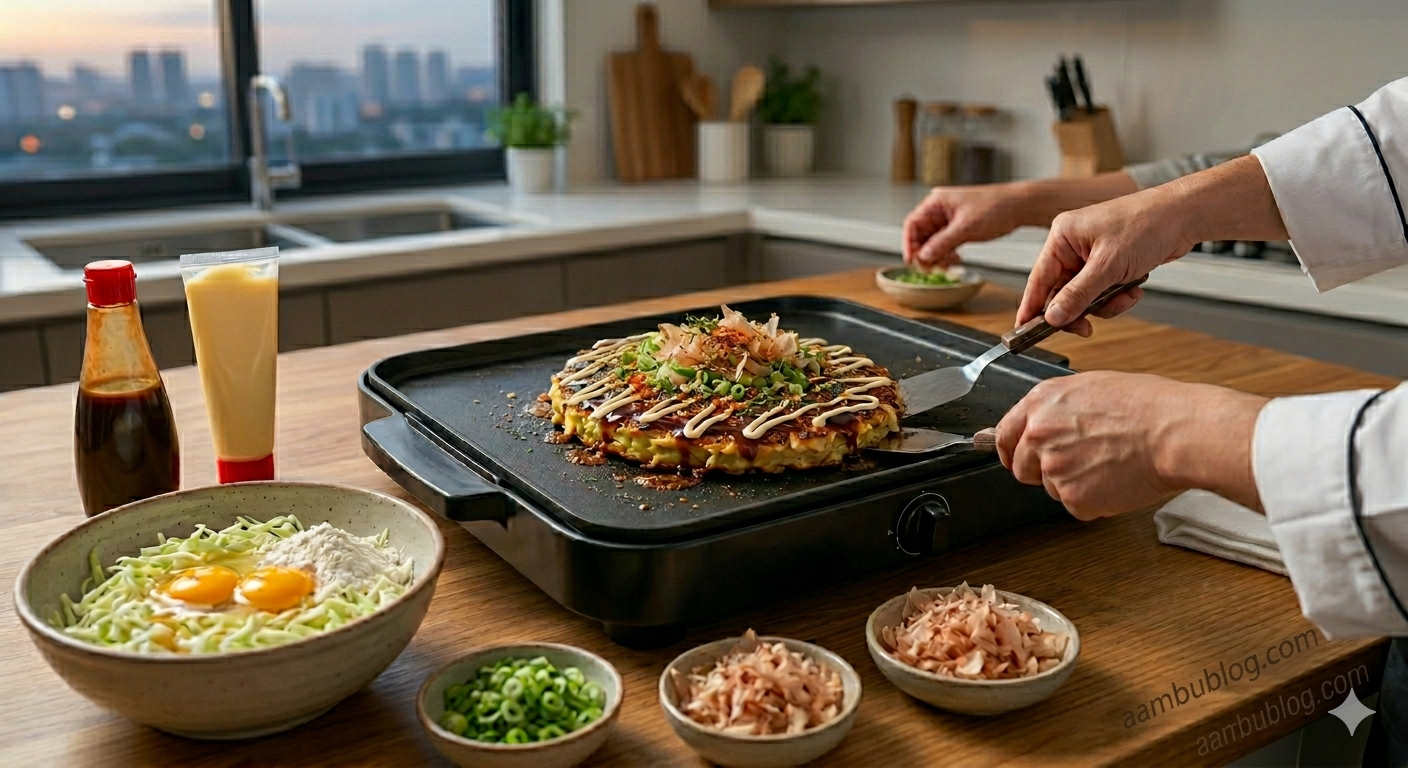
By aambublog.com Culinary Desk — March 25, 2026
If you are looking to spice up your breakfast or evening snacks with something exotic yet comforting, Okonomiyaki is the answer. Often called “Japanese Pizza” or “Japanese Cabbage Pancake,” this dish is a staple of Osaka street food. It’s healthy, filling, and customizable to your taste.
The Meaning Behind the Name
In Japanese, “Okonomi” means “how you like it” or “what you want,” and “Yaki” means “grilled” or “cooked.” This makes it the perfect recipe for food enthusiasts who love to experiment with different toppings and fillings.
Ingredients You’ll Need:
- All-Purpose Flour (Maida): 1 cup
- Water or Vegetable Stock: 2/3 cup
- Cabbage: 2 cups (very finely shredded)
- Eggs: 2 (Vegetarians can substitute with 1/4 cup of thick yogurt)
- Spring Onions: 2-3 (finely chopped)
- Ginger Paste: 1 tsp
- Salt: To taste
- Oil: For pan-frying
For the Classic Toppings:
- Okonomiyaki Sauce: (You can mix Ketchup, Worcestershire sauce, and Soy sauce)
- Mayonnaise: (Japanese Kewpie style is best, but regular works too)
- Optional: Seaweed powder (Aonori) or Chili flakes for a Desi twist.
Step-by-Step Preparation:
- Prepare the Batter: In a large mixing bowl, whisk together the flour, salt, and water (or stock) until smooth. Add the eggs (or yogurt) and whisk again until fully incorporated.
- Mix in the Greens: Add the shredded cabbage, spring onions, and ginger paste into the batter. Mix well until every piece of cabbage is lightly coated with the batter.
- The Cooking Process: Heat a non-stick frying pan with a little oil over medium heat. Pour the mixture onto the pan and shape it into a circle about 1.5cm to 2cm thick.
- Slow and Steady: Let it cook for about 5 minutes on one side until the bottom is golden brown and crispy. Carefully flip it over and cook the other side for another 5 minutes.
- The Final Garnish: Once both sides are crispy, move it to a plate. Drizzle the Okonomiyaki sauce and mayonnaise in a zigzag pattern across the top. Sprinkle with spring onions or chaat masala for that extra kick.
Nutrition Facts (Per Serving)
Estimated for 1 medium-sized Savory Pancake (Veg/Egg-based)
| Nutrient | Amount per Serving | % Daily Value* |
|---|---|---|
| Calories | 245 kcal | 12% |
| Total Fat | 9g | 14% |
| Saturated Fat | 2g | 10% |
| Cholesterol | 185mg (if using eggs) | 62% |
| Sodium | 480mg | 20% |
| Total Carbohydrates | 32g | 11% |
| Dietary Fiber | 4g | 16% |
| Sugars | 5g | – |
| Protein | 11g | 22% |
| Vitamin C | – | 45 |
Note: Percent Daily Values are based on a 2,000 calorie diet. Your daily values may be higher or lower depending on your calorie needs.
Health Benefits of Okonomiyaki:
- High Fiber: Cabbage is the main ingredient, providing excellent digestive health benefits and Vitamin K.
- Low Calorie: Compared to a traditional flour-heavy pizza, this Japanese version is mostly vegetables, making it a “guilt-free” snack.
- Protein Rich: The addition of eggs (or yogurt) provides a good dose of protein to keep you full longer.
Storage & Reheating Instructions
To maintain the best texture and flavor of your Japanese Okonomiyaki, follow these storage guidelines:
- In the Refrigerator: You can store leftover pancakes in an airtight container for up to 2–3 days. Make sure they have cooled down to room temperature before sealing.
- In the Freezer: Okonomiyaki freezes surprisingly well! Wrap individual pancakes in plastic wrap and place them in a freezer-safe bag. They will stay fresh for up to 1 month.
- Best Way to Reheat: * Pan-fry (Recommended): Reheat on a non-stick pan over low heat for 2-3 minutes per side. This brings back the original crispiness.
- Oven/Air Fryer: Heat at 180°C for about 5 minutes.
- Microwave: It’s the fastest way (1-2 minutes), but the pancake might become a bit soft and soggy.
Frequently Asked Questions (FAQ)
Q1: Can I make Okonomiyaki without eggs? A: Yes, absolutely! For a vegetarian version, you can substitute 2 eggs with 1/4 cup of thick yogurt (curd) or a “flax egg” (1 tbsp flaxseed meal + 3 tbsp water). It will still be delicious and hold its shape well.
Q2: What is the best cabbage to use for this recipe? A: The standard Green Cabbage (Patta Gobhi) found in Indian markets works perfectly. The key is to shred it very finely so it cooks quickly and evenly inside the batter.
Q3: Is Okonomiyaki healthy? A: Yes! It is primarily made of vegetables (cabbage), making it high in fiber and low in calories compared to regular pizzas. It’s a great way to sneak more veggies into your diet.
Q4: Can I add other ingredients like chicken or prawns? A: Definitely. As the name “Okonomi” suggests, you can add “whatever you like.” Finely chopped boiled chicken, small prawns, or even grated paneer can be mixed into the batter before frying.
Q5: How do I make the Okonomiyaki sauce if I don’t have the store-bought one? A: You can make a quick “Desi-Japanese” version at home by mixing 2 tbsp Tomato Ketchup, 1 tbsp Soy Sauce, and 1 tsp Honey (or Sugar).