
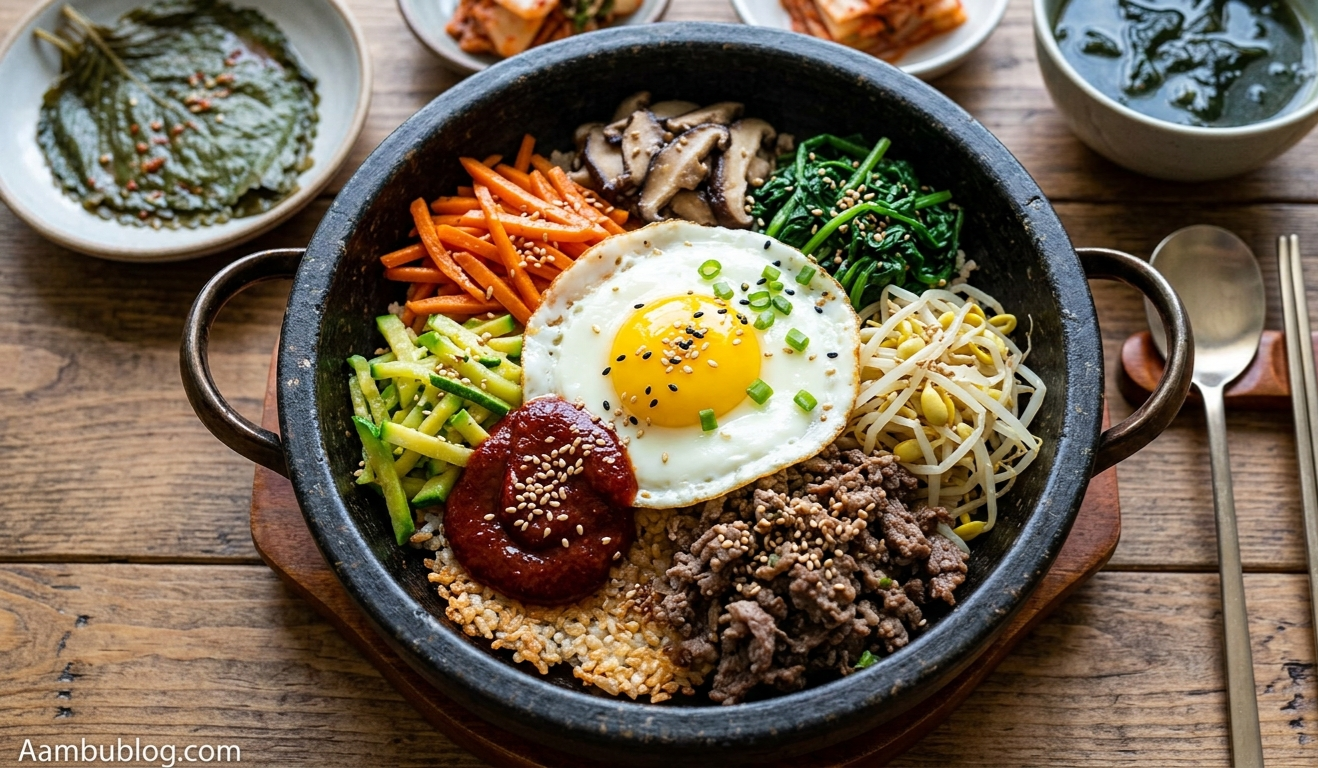
Bibimbap translates to “mixed rice,” and it is one of the most beloved Korean dishes worldwide. Packed with colorful vegetables, savory protein, a perfectly fried egg, and a spicy-sweet Gochujang sauce, this “rainbow bowl” is as nutritious as it is delicious.
1. Ingredients
The Base & Protein:
| Ingredient | Quantity |
| :— | :— |
| Cooked Short-Grain White Rice | 2 Cups (Warm) |
| Beef (Ribeye or Sirloin) | 150g (Thinly sliced) Can substitute with Tofu or Chicken |
| Eggs | 2 (For sunny-side up) |
The Vegetables (Namul):
| Ingredient | Quantity |
| :— | :— |
| Spinach | 1 bunch (Blanched) |
| Carrots | 1 medium (Julienned) |
| Shiitake Mushrooms | 4-5 (Sliced) |
| Zucchini | ½ medium (Julienned) |
| Bean Sprouts | 1 cup (Blanched) |
The Bibimbap Sauce (Gochujang Sauce):
| Ingredient | Quantity |
| :— | :— |
| Gochujang (Korean Chili Paste) | 2 tbsp |
| Sesame Oil | 1 tbsp |
| Sugar or Honey | 1 tbsp |
| Water | 1 tbsp |
| Roasted Sesame Seeds | 1 tsp |
| Apple Cider Vinegar | 1 tsp (Optional, for tang) |
2. Cooking Instructions
- Prepare the Sauce: In a small bowl, mix the Gochujang, sesame oil, sugar, water, sesame seeds, and vinegar. Stir until smooth and set aside.
- Marinate & Cook Protein: Marinate the thinly sliced beef (or tofu) in a little soy sauce, sesame oil, and garlic for 10 minutes. Sauté in a pan over medium-high heat until fully cooked. Set aside.
- Prepare the Vegetables: * Blanch the spinach and bean sprouts in boiling water for 1-2 minutes, drain, squeeze out excess water, and season lightly with salt and sesame oil.
- Sauté the carrots, zucchini, and mushrooms separately in a pan with a drop of oil and a pinch of salt until slightly softened but still crisp.
- Fry the Egg: Cook sunny-side-up eggs. The runny yolk is essential as it mixes into the rice to create a creamy texture.
- Assemble the Bowl: Place a generous scoop of warm rice in the center of a wide bowl. Arrange the prepared vegetables and meat in a colorful, circular pattern over the rice. Place the fried egg right in the middle.
- Serve: Drizzle the Gochujang sauce over the top. To eat, mix everything together vigorously!
3. Storage System & Shelf Life
- Refrigeration: The beauty of Bibimbap is in meal-prepping! Store the cooked rice, prepared vegetables, and cooked meat in separate airtight containers in the fridge. They will stay fresh for up to 4 days.
- The Sauce: The Gochujang sauce can be stored in a glass jar in the fridge for up to 2 weeks.
- Reheating Tip: Reheat the rice and meat in the microwave or pan. It is best to eat the vegetables cold or at room temperature to maintain their crunch. Always fry a fresh egg when serving.
4. Nutrition Information (Per Serving)
- Calories: 520 kcal
- Protein: 25g
- Total Fat: 18g
- Carbohydrates: 65g
- Dietary Fiber: 6g
- Vitamins: Rich in Vitamin A (from carrots/spinach) and Iron (from beef/spinach).
5. Chef’s Secret Tips (The Professional Touch)
- Sauté Separately: It might seem tedious, but cooking each vegetable separately ensures they retain their distinct flavors, colors, and textures. This is the secret to an authentic Korean presentation.
- Squeeze the Greens: When blanching spinach and bean sprouts, make sure to squeeze out as much water as possible before seasoning them. Watery vegetables will make the rice mushy.
- The Crispy Rice Hack (Dolsot Style): If you want the ultimate restaurant experience, lightly oil a heavy cast-iron skillet, press the cooked rice flat into it, and heat until the bottom gets golden and crispy before adding your toppings!
6. Frequently Asked Questions (FAQs)
Q: Is Gochujang very spicy?
A: Gochujang has a mild to medium heat with a deep, savory, and slightly sweet flavor. If you are sensitive to spice, start with just a teaspoon of sauce and mix it in gradually.
Q: Can I make this strictly vegetarian/vegan?
A: Absolutely! Skip the egg and beef. Use crispy pan-fried tofu or tempeh as your protein, and ensure your Gochujang doesn’t contain hidden seafood extracts.
Q: I don’t have Gochujang. What can I use?
A: While Gochujang provides the authentic flavor, you can make a quick substitute by mixing Sriracha with a little soy sauce and a pinch of sugar.
Q: Do I have to use short-grain rice?
A: Sticky short-grain or medium-grain rice is traditional because it clumps together well when mixed. However, you can use Jasmine rice or even brown rice for a healthier twist.