
🔴 Non-Veg / Contains Egg, Gluten & Seafood | 🥘 Main Course / Japanese Street Food
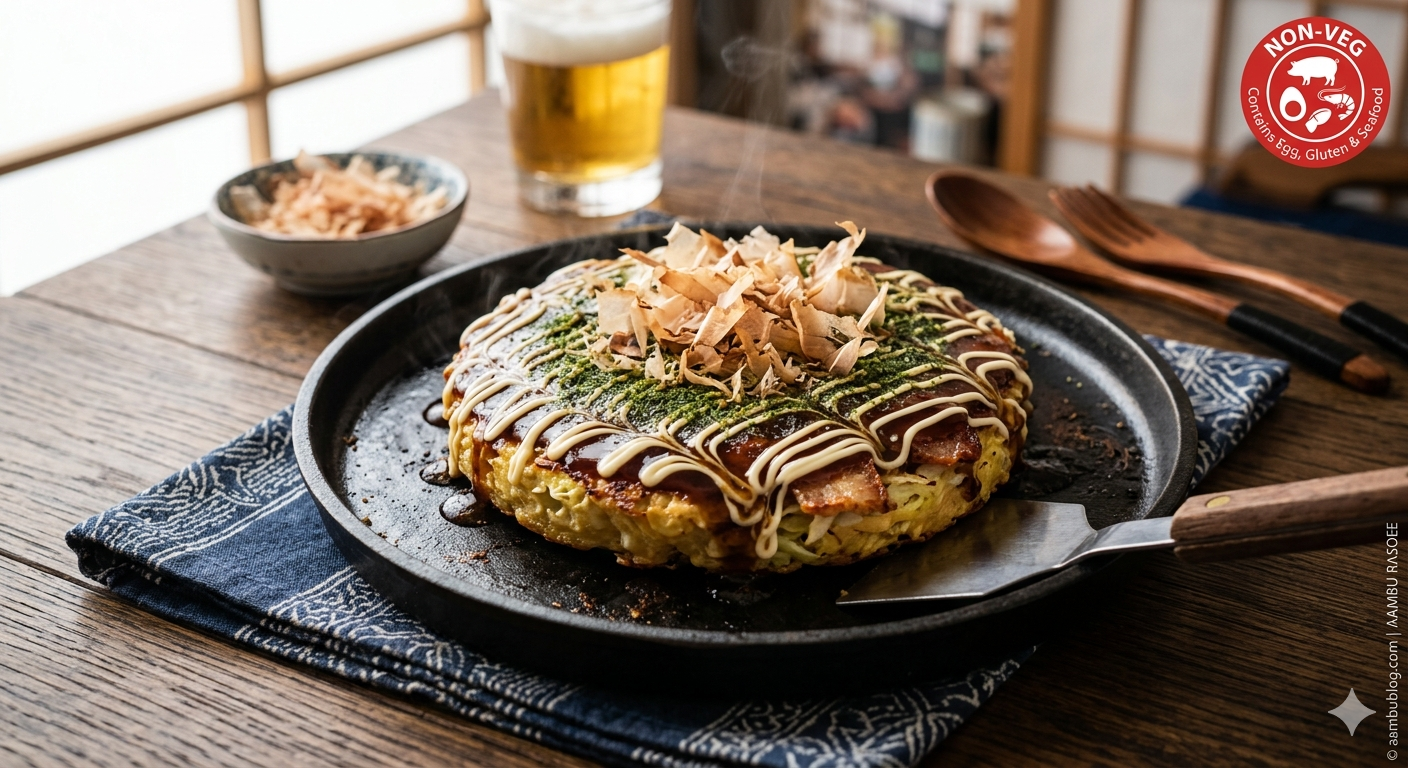
”Okonomi” means “as you like it,” and “yaki” means “grilled.” Okonomiyaki is a thick, savory pancake packed with shredded cabbage and various proteins, topped with a web of sweet-savory sauces and dancing bonito flakes. At Aambu Rasoee, we focus on the Osaka style, where everything is mixed together into a batter before hitting the griddle. It’s crispy on the outside, incredibly soft on the inside, and a total flavor bomb.
📊 Nutrition Information (Per Pancake)
| Nutrient | Amount |
|---|---|
| Calories | 520 kcal |
| Protein | 24.0 g |
| Fiber | 6.0 g |
| Total Fat | 30.0 g |
🛒 Detailed Ingredients
1. The Batter (The Secret to Softness):
- All-Purpose Flour (Maida): 1 cup
- Dashi Stock: ¾ cup (Cold Japanese kelp/bonito broth; can substitute with veg/chicken broth)
- Baking Powder: ¼ tsp (To make it airy)
- Nagaimo (Mountain Yam): 2 tbsp, grated (Secret ingredient for fluffiness; substitute with grated potato if unavailable)
- Salt: A pinch
2. The Filling:
- Cabbage: 300g (Finely shredded; the main star!)
- Eggs: 2 large
- Tenkasu (Tempura Scraps): 2 tbsp (Adds crunchy oiliness)
- Pickled Red Ginger (Beni Shoga): 1 tbsp (Chopped)
- Green Onions: 2 stalks (Sliced)
- Protein: 4-6 thin slices of Pork Belly (or Shrimp/Squid)
3. The Iconic Toppings:
- Okonomiyaki Sauce: A thick, sweet-savory brown sauce (Otafuku brand is best)
- Kewpie Mayonnaise: Japanese mayo (Creamier and slightly tangier)
- Aonori: Dried green seaweed powder
- Katsuobushi: Dried bonito flakes (The “dancing” flakes)
👩🍳 Preparation & Cooking Instructions
Step 1: Preparing the Batter
- In a large bowl, whisk together the flour, baking powder, and salt.
- Add the cold dashi stock and grated nagaimo. Mix until smooth. Pro Tip: Don’t overmix, or the pancake will become chewy instead of fluffy. Let the batter rest in the fridge for 1 hour if possible.
Step 2: The Mix
- To the batter, add the shredded cabbage, eggs, tempura scraps, green onions, and pickled ginger.
- Use a spoon to gently fold everything together. You want just enough batter to coat the cabbage—it should look like a cabbage salad held together by a little bit of dough.
Step 3: Grilling to Perfection
- Heat a non-stick skillet or flat griddle over medium heat and lightly oil it.
- Pour the mixture onto the pan, shaping it into a thick circle (about 1.5 inches thick). Do not press it down! You want to keep the air inside.
- Place the pork belly slices (or shrimp) side-by-side on top of the pancake.
- Cover the pan with a lid and cook for about 5 minutes until the bottom is golden brown.
Step 4: The Flip
- This is the fun part! Using two spatulas, confidently flip the pancake over.
- Cover again and cook for another 5 minutes until the pork is crispy and the cabbage is steamed through. Flip one last time so the meat side is up.
Step 5: The “Art” of Topping
- Brush a generous layer of Okonomiyaki sauce over the top.
- Drizzle the Kewpie mayo in a zig-zag pattern across the sauce. (You can use a toothpick to drag through the lines for a professional “marble” look).
- Sprinkle with Aonori (seaweed powder) and finish with a handful of Katsuobushi (bonito flakes). Watch them move and “dance” from the heat!
❓ Frequently Asked Questions (FAQ)
Q: Can I make this Vegetarian?
A: Absolutely! Skip the pork/seafood and use mushrooms or corn as the protein. Use a vegetarian dashi (Kombu dashi) and omit the bonito flakes on top.
Q: What if I can’t find Okonomiyaki sauce?
A: You can make a quick version at home by mixing 2 tbsp Ketchup, 1 tbsp Worcestershire sauce, 1 tbsp Soy Sauce, and 1 tsp Honey/Sugar.
Q: Why is my pancake falling apart?
A: This usually happens if the cabbage is cut too thick or if you flip it too early. Make sure the cabbage is finely shredded so the egg and batter can bind everything together.
💡 Aambu Blog Secret Tip
”For the absolute best texture, never press down on the pancake with your spatula! Pressing it squeezes out the steam and makes the inside dense. A true Osaka Okonomiyaki should be light, airy, and ‘cloud-like’ inside, contrasted by the crispy pork on the outside.”