
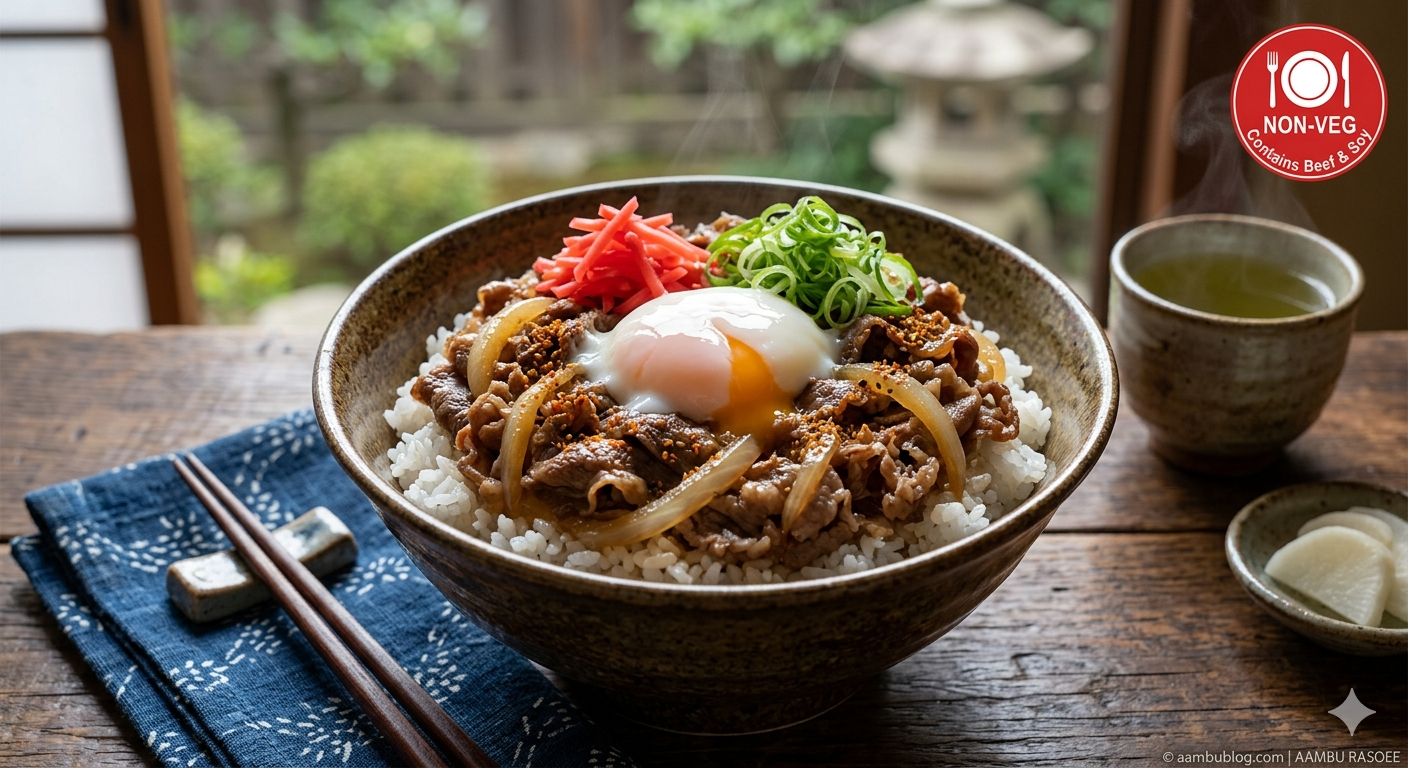
🔴 Non-Veg / Contains Beef & Soy | 🥘 Main Course / Japanese Cuisine
”Gyu” means beef and “Don” refers to the rice bowl (Donburi). Gyudon is a humble yet incredibly flavorful dish consisting of paper-thin slices of beef and tender onions simmered in a sweet and savory dashi-based sauce. It is the ultimate comfort meal for millions of people in Japan. At Aambu Rasoee, we focus on the “simmering” technique—making sure the onions are translucent and the beef is just cooked through so it stays meltingly tender.
📊 Nutrition Information (Per Serving)
| Nutrient | Amount |
|---|---|
| Calories | 620 kcal |
| Protein | 32.0 g |
| Fiber | 2.0 g |
| Total Fat | 22.0 g |
🛒 Detailed Ingredients
1. The Beef & Onion:
- Beef: 400g (Ribeye or Chuck, sliced paper-thin. Tip: Freeze the meat for 30 mins to slice it easily!)
- Onion: 1 large (Sliced into thin wedges)
- Neutral Oil: 1 tsp
2. The Classic Gyudon Sauce:
- Dashi Stock: 1 cup (Japanese kelp/bonito broth; can substitute with beef broth)
- Soy Sauce: 3 tbsp
- Mirin: 2 tbsp (Sweet rice wine)
- Sake: 2 tbsp (Japanese cooking wine)
- Sugar: 1 tbsp
3. To Serve & Garnish (The Essentials):
- Steamed Rice: 2 bowls (Short-grain Japanese rice)
- Beni Shoga: 1 tbsp (Red pickled ginger; mandatory for authenticity!)
- Green Onions: Finely sliced
- Onsen Egg: 1 (Soft-poached egg, optional but highly recommended)
- Shichimi Togarashi: A pinch (Japanese 7-spice blend)
👩🍳 Preparation & Cooking Instructions
Step 1: The Simmering Liquid
- In a medium saucepan, combine the dashi stock, soy sauce, mirin, sake, and sugar.
- Bring the mixture to a gentle boil over medium heat, stirring until the sugar is completely dissolved.
Step 2: Softening the Onions
- Add the sliced onions to the boiling liquid.
- Lower the heat to medium-low, cover the pan, and simmer for about 5-7 minutes. You want the onions to be soft, translucent, and deeply infused with the sauce’s color.
Step 3: The Quick Beef Cook
- Once the onions are ready, add the thinly sliced beef to the pan.
- Use chopsticks or a fork to separate the slices so they don’t clump together.
- Simmer for only 2 to 3 minutes. Because the beef is so thin, it cooks almost instantly. Overcooking will make the meat tough and rubbery.
- Skim off any gray foam (impurities) that rises to the top to keep the sauce clean and bright.
Step 4: The Build
- Fill two deep bowls with warm, steamed Japanese rice.
- Pour a generous amount of the cooking liquid over the rice—this is called “Tsuyu-daku” in Japan, and it flavors every grain of rice.
- Top the rice with a heavy portion of the beef and onion mixture.
Step 5: Finishing Touches
- Place a small mound of Beni Shoga (red ginger) on the side.
- Sprinkle with sliced green onions and a dash of Shichimi Togarashi.
- If using an Onsen egg, place it right in the center. When you break the yolk, it creates a rich, creamy sauce that coats the beef.
❓ Frequently Asked Questions (FAQ)
Q: Can I use different meat?
A: Yes! This same technique is used for “Butadon” (Pork bowl). Just substitute the beef with thinly sliced pork belly or shoulder.
Q: What if I don’t have Sake or Mirin?
A: You can substitute Sake with dry white wine or water. For Mirin, use water with an extra teaspoon of sugar. However, the authentic “glossy” look and deep flavor come from the Mirin.
Q: Why is my beef tough?
A: Two reasons: either the slices were too thick, or you boiled the meat for too long. Always remember: thin slices + short simmer = tender beef.
💡 Aambu Blog Secret Tip
”For a real ‘restaurant-style’ depth of flavor, don’t serve the Gyudon immediately! Turn off the heat once the beef is cooked, cover the pan, and let it sit for 5-10 minutes. This ‘resting’ period allows the meat fibers to relax and soak up the savory-sweet broth like a sponge.”