🔴 Non-Veg / Contains Chicken & Shellfish | 🥘 Main Course / Japanese Street Food
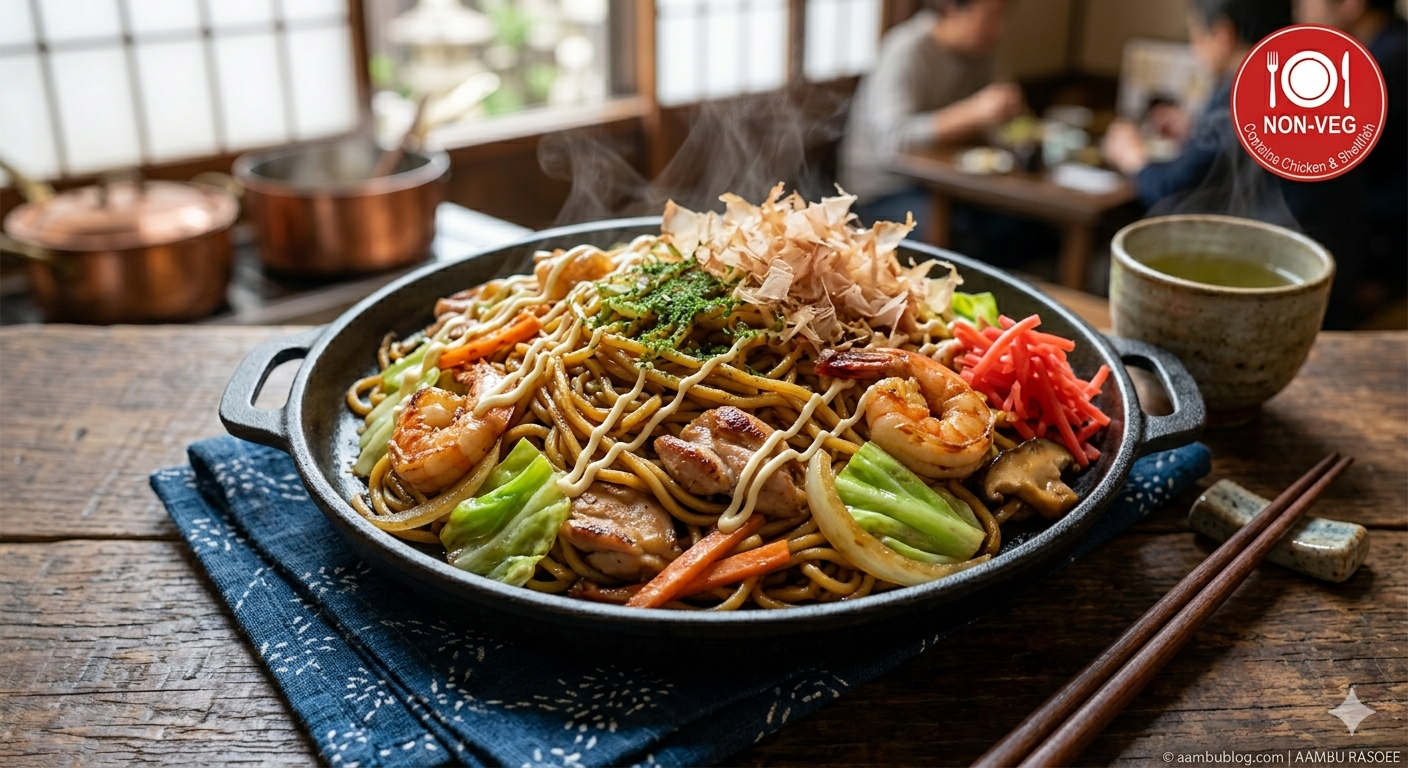
Yakisoba is the soul of Japanese festivals (Matsuri). Although “Soba” usually means buckwheat noodles, in Yakisoba, we use Chinese-style wheat noodles that are steamed and then stir-fried. The magic lies in the balance of the tangy-sweet sauce and the smoky “wok-hei” flavor. At Aambu Rasoee, we recommend using plenty of cabbage for that authentic crunch and finishing it with a generous sprinkle of Aonori for that seaside aroma.
📊 Nutrition Information (Per Serving)
| Nutrient | Amount |
|---|---|
| Calories | 480 kcal |
| Protein | 22.0 g |
| Fiber | 5.0 g |
| Total Fat | 16.0 g |
🛒 Detailed Ingredients
1. The Noodles & Protein:
- Yakisoba Noodles: 2 packs (Pre-steamed wheat noodles; if using dried, boil and drain first)
- Chicken Thighs or Pork Belly: 200g (Thinly sliced)
- Shrimp: 6-8 medium (Peeled and deveined)
- Neutral Oil: 2 tbsp
2. The Vegetable Crunch:
- Cabbage: 1/4 head (Roughly chopped into bite-sized squares)
- Onion: 1/2 medium (Sliced)
- Carrot: 1 small (Julienned)
- Shiitake Mushrooms: 3-4 (Sliced, optional)
3. The Yakisoba Sauce (The Master Mix):
- Worcestershire Sauce: 4 tbsp
- Oyster Sauce: 2 tbsp
- Ketchup: 1 tbsp
- Soy Sauce: 2 tsp
- Sugar: 1-2 tsp (Adjust for sweetness)
4. Toppings (Mandatory for Swaad):
- Beni Shoga: 1 tbsp (Red pickled ginger)
- Aonori: 1 tsp (Dried green seaweed powder)
- Katsuobushi: A handful (Bonito flakes)
- Kewpie Mayo: For drizzling
👩🍳 Preparation & Cooking Instructions
Step 1: Prepping the Sauce
In a small bowl, whisk together the Worcestershire sauce, oyster sauce, ketchup, soy sauce, and sugar. Ensure the sugar is dissolved. This sauce should be thick, dark, and glossy.
Step 2: Searing the Protein
- Heat 1 tablespoon of oil in a large wok or flat griddle over high heat.
- Add the chicken/pork and shrimp. Sear until they are golden brown and just cooked through. Remove them from the pan and set aside.
Step 3: The Wok Toss
- Add the remaining 1 tablespoon of oil to the same pan.
- Throw in the onions, carrots, and mushrooms. Stir-fry for 2 minutes.
- Add the cabbage. Stir-fry only until it starts to wilt but still retains a “snap” (crunch).
Step 4: The Noodle “Searing” Secret
- Add the yakisoba noodles to the pan.
- Pro Tip: Don’t stir immediately! Let the noodles sit on the hot pan for 1-2 minutes to get some crispy, charred spots.
- Splash 2 tablespoons of water or sake over the noodles to help them loosen up, then toss with the vegetables.
Step 5: The Glaze
- Add the cooked meat and shrimp back into the pan.
- Pour the Yakisoba sauce over everything. Toss vigorously over high heat for 1-2 minutes until every strand of noodle is coated in the dark, sticky sauce and the liquid has evaporated.
Step 6: Plating
Serve on a flat plate. Garnish with a mound of Beni Shoga on the side, a sprinkle of Aonori and Katsuobushi on top, and a zig-zag drizzle of Kewpie mayo.
❓ Frequently Asked Questions (FAQ)
Q: Can I use Italian Spaghetti instead?
A: In a pinch, yes! Boil spaghetti with 1 tsp of baking powder in the water. This gives the pasta an alkaline, springy texture similar to Japanese noodles.
Q: My noodles are too mushy. What happened?
A: This happens if you add too much water or overcook them before stir-frying. Yakisoba should be firm and slightly “dry” with a glossy coat of sauce, not watery.
Q: Is there a vegetarian version?
A: Definitely! Replace the meat with Tofu or extra mushrooms and use a vegetarian Stir-fry sauce instead of Oyster sauce.
💡 Aambu Blog Secret Tip
”The secret to the best Yakisoba is the ‘Noodle Char’. Don’t be afraid to let the noodles sit undisturbed on the high heat for a minute. Those slightly burnt, crispy bits provide a smoky contrast to the sweet sauce that makes the dish taste exactly like it came from an Osaka street stall!”