🔴 Non-Veg / Contains Pork & Gluten | 🥘 Appetizer / Japanese Cuisine
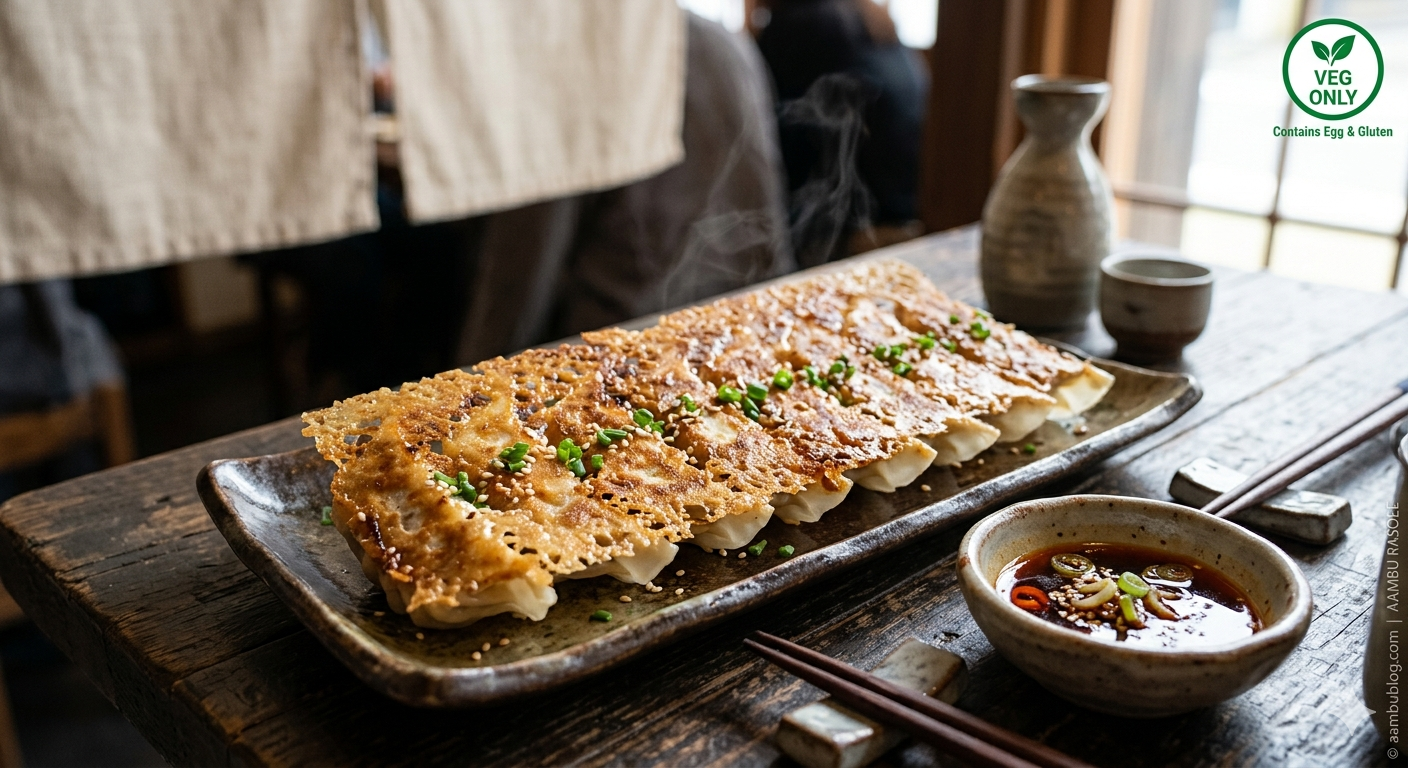
Japanese Gyoza are different from Chinese potstickers. They have a thinner wrapper and a more finely textured filling, usually dominated by a strong garlic and ginger punch. The most famous way to serve them is “Hanetsuki” (with wings), where a thin lacy crust connects the dumplings. At Aambu Rasoee, we focus on the “Fry-Steam-Fry” technique—this ensures a juicy interior and a shatteringly crisp golden bottom.
📊 Nutrition Information (Per 6 Dumplings)
| Nutrient | Amount |
|---|---|
| Calories | 310 kcal |
| Protein | 14.0 g |
| Fiber | 2.0 g |
| Total Fat | 18.0 g |
🛒 Detailed Ingredients
1. The Filling:
- Ground Pork or Chicken: 300g (Pork is more traditional for juiciness)
- Napa Cabbage: 200g (Finely minced)
- Garlic Chives (Nira): 1/2 bunch (Finely chopped; can use green onions if unavailable)
- Fresh Ginger: 1 tsp (Grated)
- Garlic: 2 cloves (Minced)
2. The Seasoning:
- Soy Sauce: 1 tbsp
- Sesame Oil: 1 tbsp
- Oyster Sauce: 1 tsp
- Sake: 1 tsp
- Salt & Pepper: To taste
3. The Assembly:
- Gyoza Wrappers: 25-30 (Thin, round wheat wrappers)
- Cornstarch Slurry: 1 tsp cornstarch mixed with 1/2 cup water (For the “wings”)
- Neutral Oil: For frying
4. The Dipping Sauce:
- Soy Sauce: 2 tbsp
- Rice Vinegar: 1 tbsp
- La-Yu (Japanese Chili Oil): A few drops
👩🍳 Preparation & Cooking Instructions
Step 1: The Cabbage Secret
- Mince the napa cabbage and sprinkle a little salt over it. Let it sit for 10 minutes.
- Crucial Step: Squeeze the cabbage with your hands to remove all excess water. This prevents the gyoza from becoming soggy and helps them stay crisp.
Step 2: Mixing the Filling
- In a large bowl, combine the squeezed cabbage, meat, garlic chives, ginger, garlic, and all seasoning ingredients.
- Mix vigorously with your hand until the mixture becomes pale and “tacky” (sticky).
Step 3: The Art of Pleating
- Hold a wrapper in your palm and place a teaspoon of filling in the center.
- Wet the edge of the wrapper with water.
- Fold it in half and make 4-6 pleats on one side only, pressing them against the flat side. This creates the classic crescent shape that allows the gyoza to stand up in the pan.
Step 4: The Fry-Steam-Fry Method
- Heat 1 tbsp oil in a non-stick skillet over medium-high heat.
- Place the gyoza in the pan (flat side down) in a circular pattern. Fry for 2 minutes until the bottoms are light golden.
- Pour the cornstarch slurry into the pan and immediately cover with a lid. Let it steam for 4-5 minutes until the water is almost gone.
- Remove the lid. Drizzle a little sesame oil around the edges. Continue cooking uncovered for 1-2 minutes until the remaining water evaporates and a crispy, lacy brown crust forms at the bottom.
Step 5: The Flip
Place a plate over the skillet and quickly flip the pan over so the gyoza land on the plate with their crispy, golden bottoms facing up!
❓ Frequently Asked Questions (FAQ)
Q: Can I freeze these?
A: Yes! Gyoza freeze beautifully. Place them on a tray (not touching) and freeze until solid, then move to a bag. Cook them directly from frozen; just add 2 extra minutes to the steaming time.
Q: What is the difference between Gyoza and Dumplings?
A: Gyoza have much thinner skins compared to Chinese dumplings, and the filling is usually more finely minced, almost like a paste, giving it a unique texture.
Q: Is there a vegetarian version?
A: Definitely. Replace the meat with finely chopped mushrooms, crumbled firm tofu, and vermicelli noodles. Use vegetarian stir-fry sauce instead of oyster sauce.
💡 Aambu Blog Secret Tip
”The secret to the ‘Golden Wings’ (Hanetsuki) is the cornstarch-water ratio. If you use too much cornstarch, the crust will be hard; too little, and it won’t form. That 1 tsp to 1/2 cup water ratio is the sweet spot for a delicate, paper-thin crunch that shatters when you bite into it!”