
🔴 Non-Veg / Contains Egg & Gluten | 🥘 Main Course / Japanese Cuisine
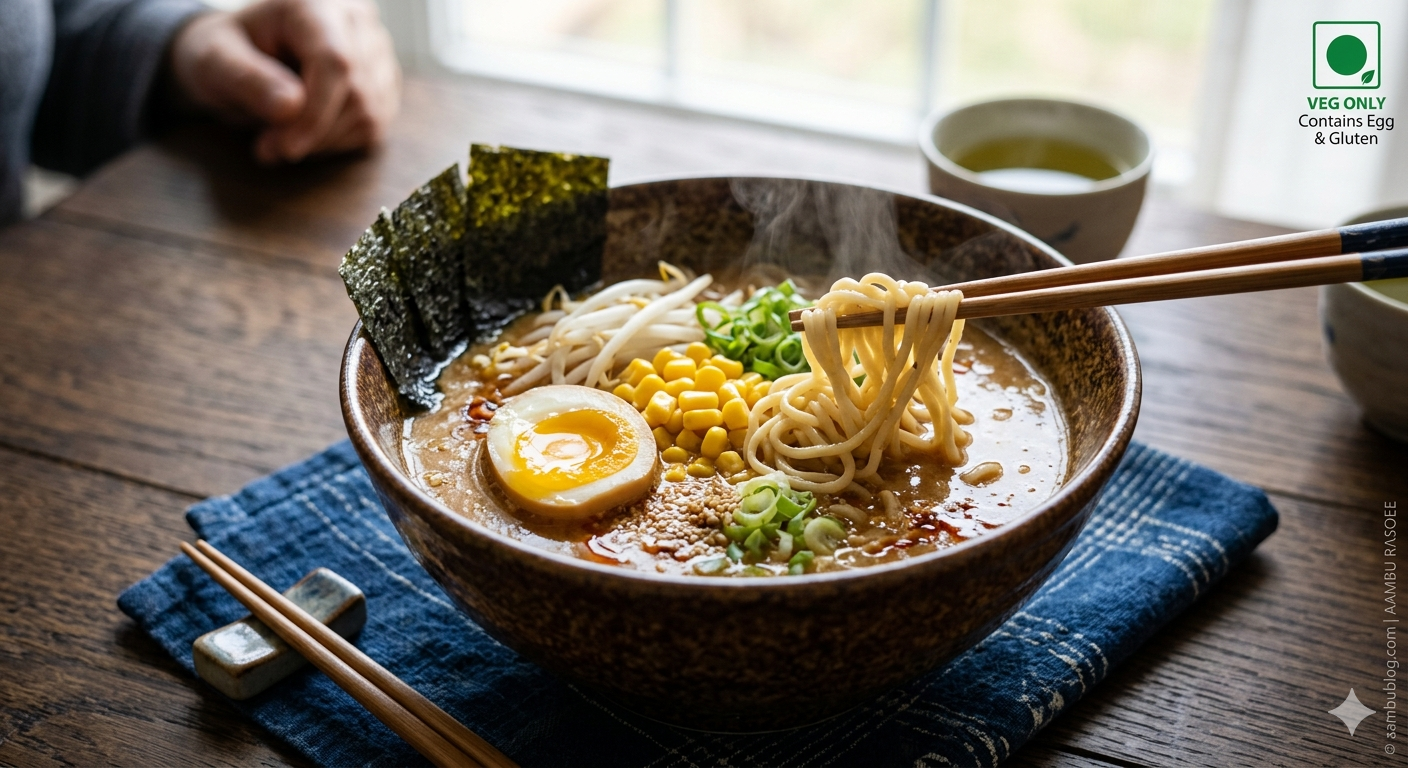
Miso Ramen is the king of comfort food in Japan. Unlike the lighter Shoyu (soy sauce) or Shio (salt) ramen, Miso Ramen is known for its thick, nutty, and deeply savory broth. The secret lies in the ‘Miso Tare’—a concentrated paste of fermented soybeans that creates a complex flavor profile. At Aambu Rasoee, we believe a great ramen is all about the balance between the chewy alkaline noodles, the rich broth, and the perfectly soft-boiled “Ajitsuke Tamago” (marinated egg).
📊 Nutrition Information (Per Serving)
| Nutrient | Amount |
|---|---|
| Calories | 580 kcal |
| Protein | 28.0 g |
| Fiber | 4.0 g |
| Total Fat | 24.0 g |
🛒 Detailed Ingredients
1. The Flavor Base (Miso Tare):
- Miso Paste: 4 tbsp (Use ‘Awase’ Miso—a mix of red and white—for the best balance)
- Sesame Oil: 1 tbsp
- Garlic: 3 cloves (Finely minced)
- Ginger: 1 inch (Grated)
- Doubanjiang (Chili Bean Paste): 1 tsp (Optional, for a subtle spicy kick)
2. The Broth & Noodles:
- Chicken or Pork Broth: 1 liter (High quality, unsalted preferred)
- Ramen Noodles: 2 portions (Fresh or high-quality dried alkaline noodles)
- Soy Sauce: 1 tbsp
- Sugar: 1 tsp
3. The Essential Toppings:
- Ajitsuke Tamago: 2 (Japanese soft-boiled marinated eggs, halved)
- Sweet Corn: 4 tbsp (Boiled or canned)
- Green Onions: 2 stalks (Finely sliced)
- Nori (Seaweed): 2 sheets (Cut into small rectangles)
- Bean Sprouts: 1 cup (Lightly blanched)
- Menma (Bamboo Shoots): Optional garnish
👩🍳 Preparation & Cooking Instructions
Step 1: The Aromatic Tare
- Heat sesame oil in a small pan over low heat. Add the minced garlic and grated ginger. Sauté for 1-2 minutes until fragrant but not brown.
- Add the Doubanjiang (if using) and stir for 30 seconds.
- Turn off the heat and whisk in the miso paste, soy sauce, and sugar until it forms a smooth, thick paste. This is your “Tare”—the soul of the ramen.
Step 2: Preparing the Soulful Broth
- In a large pot, bring your chicken or pork broth to a gentle simmer.
- Take a ladle of the hot broth and add it to your miso tare bowl. Whisk until the tare is completely liquid and smooth.
- Pour this mixture back into the main pot. CRITICAL: Lower the heat immediately. Never let the broth boil vigorously after adding the miso, as it will lose its delicate aroma and nutritional value. Keep it on a very low simmer.
Step 3: The Noodle Boil
- In a separate large pot, boil plain water. Cook your ramen noodles according to the package instructions (usually 2-3 minutes for fresh, 4-5 for dried).
- Pro Tip: Cook them “Al Dente” (slightly firm) because they will continue to soften once they hit the hot broth. Drain well.
Step 4: The Ultimate Assembly
- Pour the hot miso broth into two deep ramen bowls.
- Carefully add the cooked noodles, using chopsticks to lift and fold them so they sit beautifully in the center.
- Arrange your toppings in sections: a pile of corn, a handful of bean sprouts, the sliced green onions, and the star—the halved marinated egg.
- Tuck the Nori sheet into the side of the bowl. Serve piping hot!
❓ Frequently Asked Questions (FAQ)
Q: Can I make this 100% Vegetarian?
A: Absolutely! Replace the chicken broth with a rich vegetable or shiitake mushroom broth, and skip the egg or replace it with silken tofu. The Miso Tare itself is usually vegan.
Q: Which Miso paste is best?
A: For Ramen, ‘Awase Miso’ is best because it combines the sweetness of white miso with the bold punch of red miso. If you only have white miso, add a tiny bit more soy sauce for depth.
Q: Why do we boil noodles in separate water?
A: Never cook noodles directly in the broth! The starch from the noodles will make your beautiful, clear miso broth thick, cloudy, and gummy.
💡 Aambu Blog Secret Tip
”The secret to a truly ‘creamy’ feel without adding cream is to add 1 tablespoon of ground toasted sesame seeds (Surigoma) to your tare. It adds a nutty richness and a velvety texture to the broth that makes it taste exactly like a high-end Tokyo ramen shop!”