
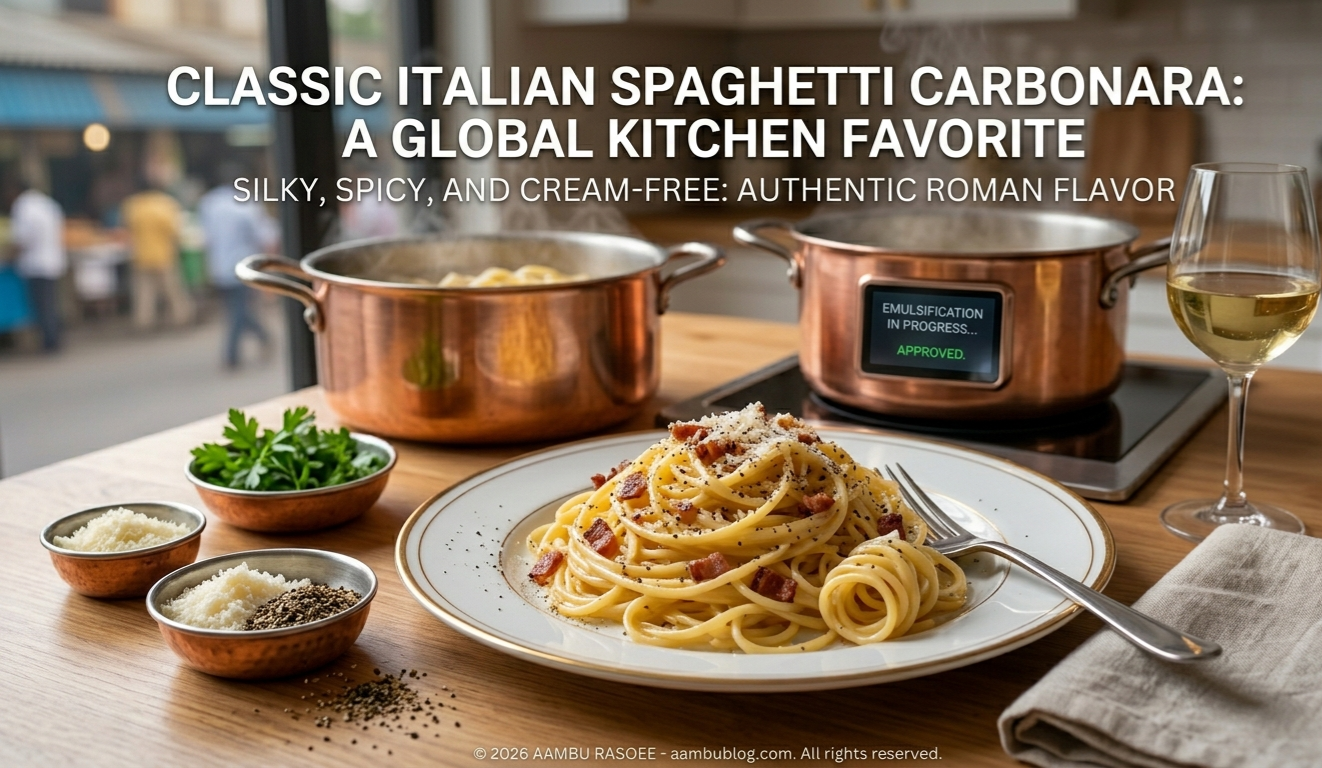
Welcome to the Global Kitchen section of AAMBU RASOEE. Today, we travel to the heart of Italy to master one of the most famous yet misunderstood dishes in the world: Spaghetti Carbonara.
While many modern versions use heavy cream, a truly authentic Roman Carbonara relies on the magic of high-quality eggs and sharp cheese to create its signature silky texture. At AAMBU RASOEE, we believe in respecting the original technique to bring that “Trattoria” flavor straight to your dining table in Navi Mumbai.
The Story of Carbonara
The word Carbonara is derived from Carbonaro (charcoal maker). Some believe the dish was originally made as a hearty meal for Italian charcoal workers. The heavy use of black pepper in the recipe is said to resemble coal dust, giving the dish its distinct, bold character.
Ingredients (Serves 2)
- Spaghetti: 200g (Use high-quality durum wheat pasta for the best ‘bite’).
- Eggs: 2 Large Whole Eggs + 1 Egg Yolk (The extra yolk provides that deep golden color and richness).
- Pecorino Romano or Parmesan Cheese: 50g (Finely grated).
- Guanciale or Smoked Bacon: 100g (Diced into small cubes).
- Black Pepper: 1 tbsp (Freshly cracked—this is the soul of the dish).
- Sea Salt: For the pasta water.
- Extra Virgin Olive Oil: 1 tsp.
Step-by-Step Instructions
Step 1: Create the “Cream” Base
In a small mixing bowl, whisk together the eggs, the extra egg yolk, and the finely grated cheese. Add half of your cracked black pepper into this mixture. Whisk until it forms a thick, pale yellow paste. Set this aside.
Step 2: The Art of Boiling Pasta
Bring a large pot of water to a rolling boil and add a generous amount of salt. Add the spaghetti and cook until it is ‘Al Dente’ (firm to the bite).
CRITICAL STEP: Before draining, reserve about 1 cup of starchy pasta water. This liquid gold is the secret to emulsifying your sauce later.
Step 3: Rendering the Fat
While the pasta cooks, heat a large pan over medium heat with a drop of olive oil. Add your bacon or guanciale. Fry slowly until the fat renders out and the meat becomes crispy and golden brown.
Step 4: The Emulsification (The Most Important Part)
- Drain the pasta and add it directly to the pan with the crispy bacon. Toss well so the pasta is coated in the rendered fat.
- REMOVE THE PAN FROM THE HEAT. This is vital. If the pan is too hot, the eggs will scramble.
- Pour the egg and cheese mixture over the pasta.
- Immediately add a splash of the reserved warm pasta water and toss vigorously with tongs or a fork.
The heat from the pasta and the starch in the water will melt the cheese and cook the eggs into a glossy, creamy sauce that clings to every strand of spaghetti.
📊 Nutrition Information (Per Serving)
| Nutrients | Amount Per Serving | % Daily Value* |
|---|---|---|
| Calories | 485 kcal | 24% |
| Total Fat | 24g | 31% |
| Carbohydrates | 44g | 16% |
| Protein | 22g | 44% |
| Dietary Fiber | 2g | 7% |
AAMBU RASOEE’s Pro-Tips for Perfection
- Never Use Cream: The creaminess should come only from the emulsion of egg, cheese, and starchy water. Adding cream dilutes the sharp flavor of the cheese.
- Pepper Matters: Do not use pre-ground pepper powder. Use a peppermill or crush whole peppercorns in a mortar and pestle for that spicy, aromatic kick.
- Temper the Eggs: If you are worried about the eggs curdling, whisk a tablespoon of the warm pasta water into your egg mixture before pouring it onto the pasta to “temper” it.