
🔴 Non-Veg / Contains Eggs | 🥘 Main Course / Italian Cuisine
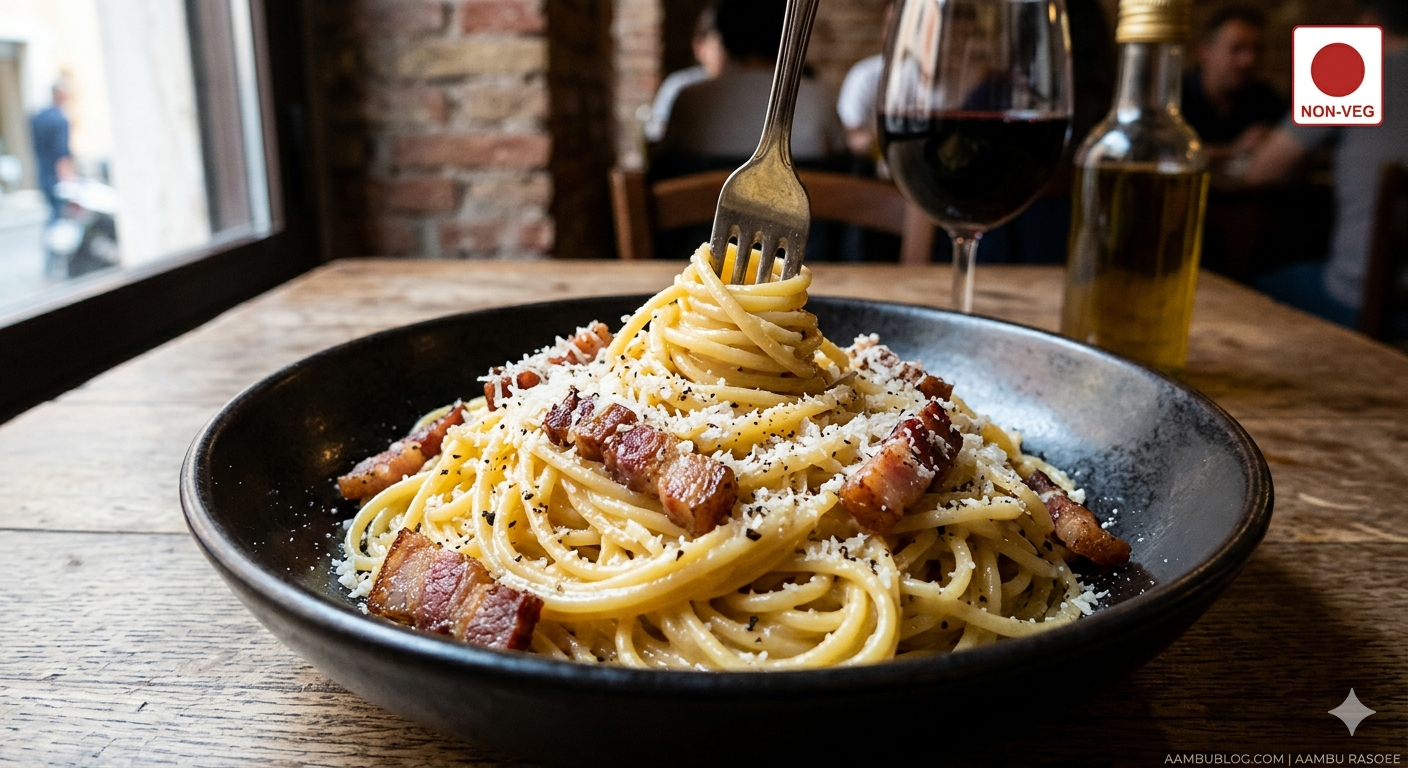
Spaghetti Carbonara is a cornerstone of Roman cuisine, and the authentic version relies solely on the perfect emulsion of eggs, hard cheese, cured pork, and starchy pasta water to create a silky, glossy sauce—no heavy cream whatsoever. The key to mastering this European favorite is technique, which we are proud to share at Aambu Rasoee.
📊 Nutrition Information (Per Serving)
| Nutrient | Amount |
|---|---|
| Calories | 495 kcal |
| Protein | 22.0 g |
| Fiber | 2.5 g |
| Total Fat | 26.0 g |
🛒 Detailed Ingredients
1. The Pasta:
- Spaghetti (Durum Wheat): 200g
- Water: For boiling (lots of it)
- Salt: To taste (The water should taste like the sea)
2. The “Cream” Base:
- Egg Yolks: 2 large
- Whole Egg: 2 large
- Pecorino Romano Cheese: 50g (Finely grated)
- Black Pepper: 1 tbsp (Freshly cracked—the ‘carbon’ in carbonara!)
3. The Fat & Flavor:
- Guanciale (Cured Pork Cheek): 100g (Cut into small lardons/cubes)
- Optional: If Guanciale is unavailable, high-quality Pancetta can be substituted. Do not use standard smoked bacon.
👩🍳 Preparation & Cooking Instructions
Step 1: The Egg Mixture
In a medium bowl, whisk together the whole eggs, yolks, and the finely grated Pecorino Romano. Add a generous amount of freshly cracked black pepper. The mixture should be a thick, golden paste. Set this aside.
Step 2: Preparing the Pork
Place the Guanciale (or Pancetta) in a cold frying pan and turn the heat to medium-low. This slow render draws out the fat and makes the pork incredibly crispy. Cook until the fat has melted and the pork is golden and crunchy. CRITICAL: Do not drain the fat; it is essential for the sauce.
Step 3: Boiling the Pasta
Bring a large pot of heavily salted water to a boil. Add the spaghetti and cook until Al Dente (firm to the bite), usually 1 minute less than the package directions. CRITICAL: Before draining the pasta, reserve at least 1 cup of the starchy pasta water.
Step 4: The Emulsion (Tossing & Mixing)
- Turn off the heat under the pan with the crispy pork. Add 2 tablespoons of the rendered fat to the egg mixture.
- Drain the hot spaghetti and add it directly to the frying pan with the remaining fat and pork.
- Rapidly toss the pasta in the fat until every strand is coated. Let the pan cool for 30 seconds (if it’s too hot, the eggs will scramble).
- Pour the egg and cheese mixture over the pasta. Quickly toss and stir constantly using tongs or a pasta fork.
- Immediately add 1/4 to 1/2 cup of the reserved hot pasta water. The heat from the pasta and the water will cook the eggs just enough to create a smooth, creamy sauce that clings to the pasta. Continue to add small splashes of pasta water as needed until the consistency is glossy and perfect.
Step 5: The Final Finish
Serve immediately on warm plates. Garnish with a little more Pecorino Romano and another hit of cracked black pepper.
❓ Frequently Asked Questions (FAQ)
Q: Why don’t you use cream?
A: In Rome, adding cream to Carbonara is considered a cardinal sin. The silky sauce is created entirely by the emulsion of egg yolks, cheese, and pasta water, which results in a rich but light dish.
Q: Is it safe to use raw eggs?
A: The technique uses the residual heat of the pasta and the boiling pasta water to gently cook the egg mixture into a safe, creamy sauce. Use fresh, high-quality eggs for peace of mind.
Q: What if my sauce turns into scrambled eggs?
A: This happens when the pan is too hot. Always turn off the flame and let the pan cool for 30-45 seconds before adding the egg mixture. Using a large mixing bowl (off heat) instead of the frying pan is a great way to guarantee success.
💡 Aambu Blog Secret Tip
”The secret to authentic Carbonara is the texture of the Pecorino Romano! Grate your cheese as finely as possible, almost into a powder. This helps it melt instantly into the egg mixture and starchy water, ensuring a silky finish without any waxy lumps.”