
🔴 Non-Veg / Contains Beef | 🥘 Main Course / German Cuisine
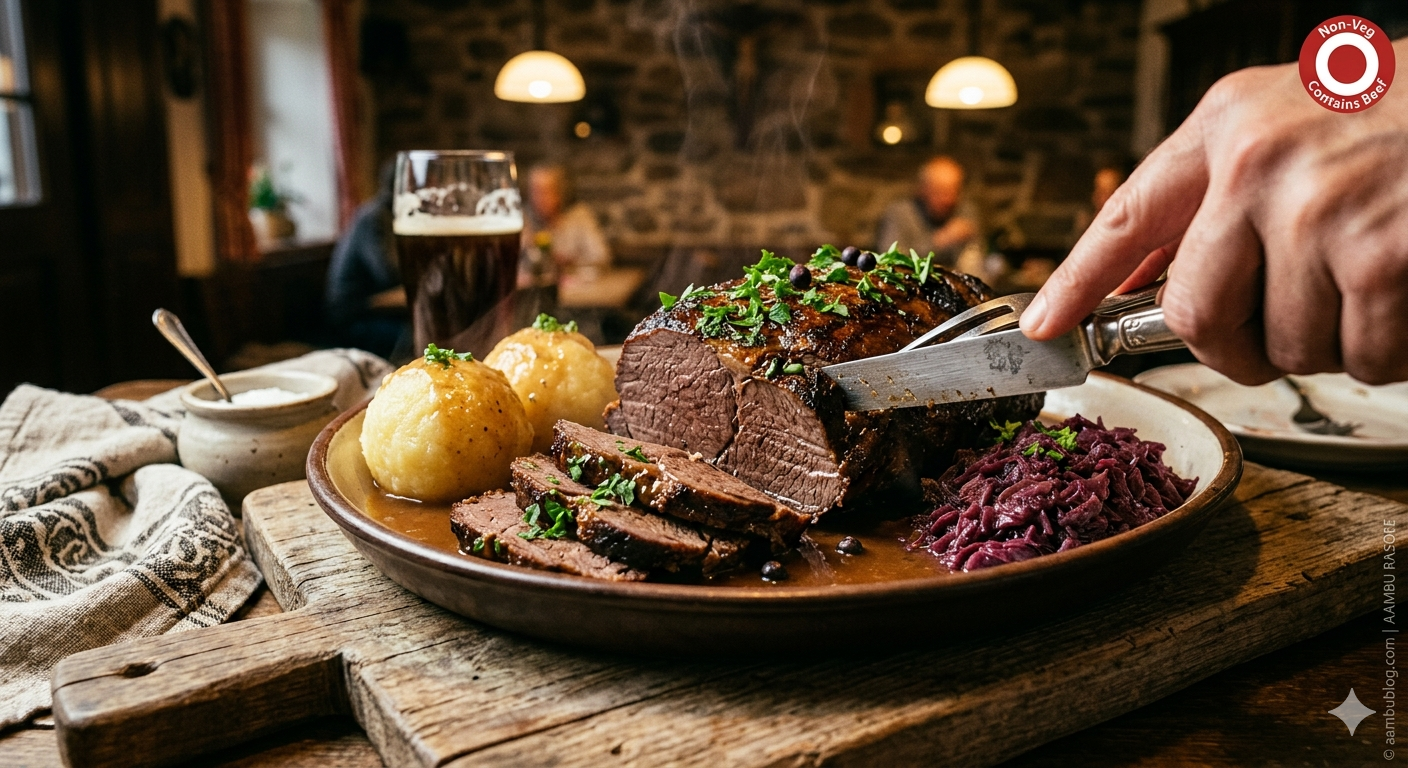
Sauerbraten is a staple of German cuisine, famous for its unique cooking method. A robust beef roast is submerged in a vinegar-based marinade with spices and vegetables for several days, breaking down the tough fibers and creating its characteristic tart profile. After slow-cooking, the resulting roast falls apart, and the marinade is transformed into a luscious gravy, often thickened and sweetened with crushed gingersnap cookies. It’s perfect with traditional German sides like potato dumplings or braised red cabbage.
📊 Nutrition Information (Per Serving)
| Nutrient | Amount |
|---|---|
| Calories | 480 kcal |
| Protein | 36 g |
| Fiber | 4 g |
| Total Fat | 34 g |
🛒 Detailed Ingredients
1. The Beef & Vegetable Base:
- Beef Roast (Bottom Round or Chuck): 1.5 kg (A tough cut that slow-cooks well)
- Onion: 2 large (Chopped)
- Carrot: 2 medium (Chopped)
- Celery Stalks: 2 (Chopped)
2. The Marinade & Spices (The Pungent Heart):
- Red Wine Vinegar: 1 cup (Or 1/2 cup vinegar and 1/2 cup dry red wine)
- Water: 2 cups
- Sugar: 1 tbsp
- Salt: 1 tbsp
- Black Peppercorns: 1 tsp
- Juniper Berries: 1 tsp
- Whole Cloves: 5-6
- Bay Leaves: 3
3. The Cooking & Gravy:
- Oil or Lard: 1-2 tbsp (For searing)
- Water or Beef Broth: 1-2 cups (If needed, for slow-cooking)
- Gingersnaps or Lebkuchen: 1/2 cup (Crushed, to thicken and sweeten the gravy)
👩🍳 Preparation & Cooking Instructions
Step 1: The Multi-Day Marinade (Crucial for Flavor)
- In a large saucepan, combine red wine vinegar, water, sugar, salt, black peppercorns, juniper berries, whole cloves, and bay leaves. Bring to a boil, then immediately turn off the heat and let it cool completely. Do not use the marinade while it is hot.
- Place the beef roast in a large, non-reactive container (glass, ceramic, or food-safe plastic) that will hold the meat snugly. Add the chopped onions, carrots, and celery.
- Pour the cooled marinade over the beef and vegetables, making sure the roast is mostly submerged. (If not, add more vinegar and water in a 1:2 ratio).
- Cover the container tightly and place it in the refrigerator. Marinate for at least 3 days, preferably up to 5 days, turning the meat once a day.
Step 2: Searing and Slow-Cooking to Perfection
- After the marination is complete, remove the beef from the container and pat it very dry with paper towels. Keep the marinade. Strain the vegetables and spices from the marinade and set them aside.
- Heat oil or lard in a large, heavy-bottomed Dutch oven or pot over medium-high heat. Add the beef roast and sear it well on all sides until it develops a deep, golden-brown crust.
- Remove the beef and set aside. In the same pot, add the strained vegetables and sauté for 5 minutes until they start to soften.
- Pour the strained marinade (or a portion of it, diluted with water or broth if it’s too strong) back into the pot, scraping up the browned bits (fond) from the bottom.
- Place the beef roast back in the pot, nesting it among the vegetables. The liquid should cover about one-third to one-half of the roast. Add more water or beef broth if needed.
- Bring the liquid to a simmer, then cover the pot with a tight-fitting lid. Cook on low heat for 3-4 hours, turning the roast every hour, until the beef is incredibly tender and almost falling apart.
Step 3: Creating the Legendary Gravy
- When the beef is cooked, gently lift it from the pot and set it on a warm platter. Cover it with foil to rest.
- Strain the cooking liquid into a clean saucepan, pressing the vegetables to extract all their flavor. Reserve about 1 cup of the vegetables.
- Place the saucepan with the strained liquid over medium heat. Add the crushed gingersnaps or Lebkuchen. The cookies will dissolve, thickening the gravy and adding the characteristic hint of spice and sweetness that defines a classic Sauerbraten gravy.
- Simmer for 10-15 minutes until the gravy is smooth and luscious. Adjust seasoning with salt, pepper, or a pinch of sugar if needed. Add some of the reserved strained vegetables back to the gravy if you prefer more texture.
Step 4: The Final Plate
Slice the tender Sauerbraten against the grain. Serve the slices generously topped with the hot, rich gravy. Traditionally, this dish is accompanied by Kartoffelklöße (Potato Dumplings) or Spätzle (German Egg Noodles), and Rotkohl (Braised Red Cabbage).
❓ Frequently Asked Questions (FAQ)
Q: Can I shorten the marination time?
A: A minimum of 3 days is essential for the acid to tenderize the tough fibers and infuse the flavor. Shorter times will result in a less flavorful and tougher roast.
Q: Why are gingersnaps used in the gravy?
A: Gingersnaps are the secret to the unique sweet-and-sour flavor of Sauerbraten gravy. They provide spice (ginger, cinnamon, cloves), sweetness, and a perfect thickening agent, replacing a traditional flour or cornstarch slurry.
Q: What if my marinade is too strong?
A: Before slow-cooking, taste the marinade. If it’s intensely sour, dilute it with water or beef broth until it is acidic but pleasant. A good rule of thumb is to use 1 part marinade to 1 part additional water or broth.
💡 Aambu Blog Secret Tip
”After straining the marinade to build the gravy, pulse the reserved vegetables and some of the marinade together in a blender before combining with the dissolved gingersnaps. This makes the gravy incredibly smooth and flavorful, giving it a depth that straining alone can’t provide!”