

Introduction
You might be tempted to close that old credit card you got in college because you don’t use it anymore, or perhaps you’ve finally paid it off and want to “clean up” your wallet. Stop right there. In the US credit system, your “Credit Age” is one of the most powerful factors in determining your score. Closing an old account—even one with a zero balance—can cause your credit score to drop overnight. Here is why that old plastic is more valuable than you think.
How Credit Age Impacts Your Score
Your Length of Credit History accounts for 15% of your total FICO score. Lenders want to see that you have a long, proven track record of managing credit responsibly.
When you close your oldest account:
- Your Average Age of Accounts (AAoA) Drops: If you have one card that is 10 years old and a new one that is 1 year old, your average age is 5.5 years. If you close the 10-year-old card, your average age instantly crashes to 1 year.
- Your Total Credit Limit Shrinks: Closing a card reduces your total available credit across all accounts. This makes your “Credit Utilization” (how much of your limit you are using) look much higher, which accounts for 30% of your score.
What if the Card has an Annual Fee?
This is the only valid reason to consider closing it. However, before you cancel, try this:
- Product Change (Downgrade): Call the bank and ask to “downgrade” the card to a version with No Annual Fee. You keep the same account number and the same “age,” but you stop paying the yearly fee.
- The “Sock Drawer” Strategy: If the card has no annual fee, just keep it. Put it in a drawer and use it once every six months for a small purchase (like a $5 coffee) to keep the bank from closing it due to inactivity.
When is it Okay to Close a Card?
While rarely recommended for your oldest card, you might close a newer account if:
- It has a high annual fee and no downgrade options.
- You are going through a divorce or separation and need to close joint accounts.
- The bank is predatory (charging high monthly maintenance fees).
Conclusion
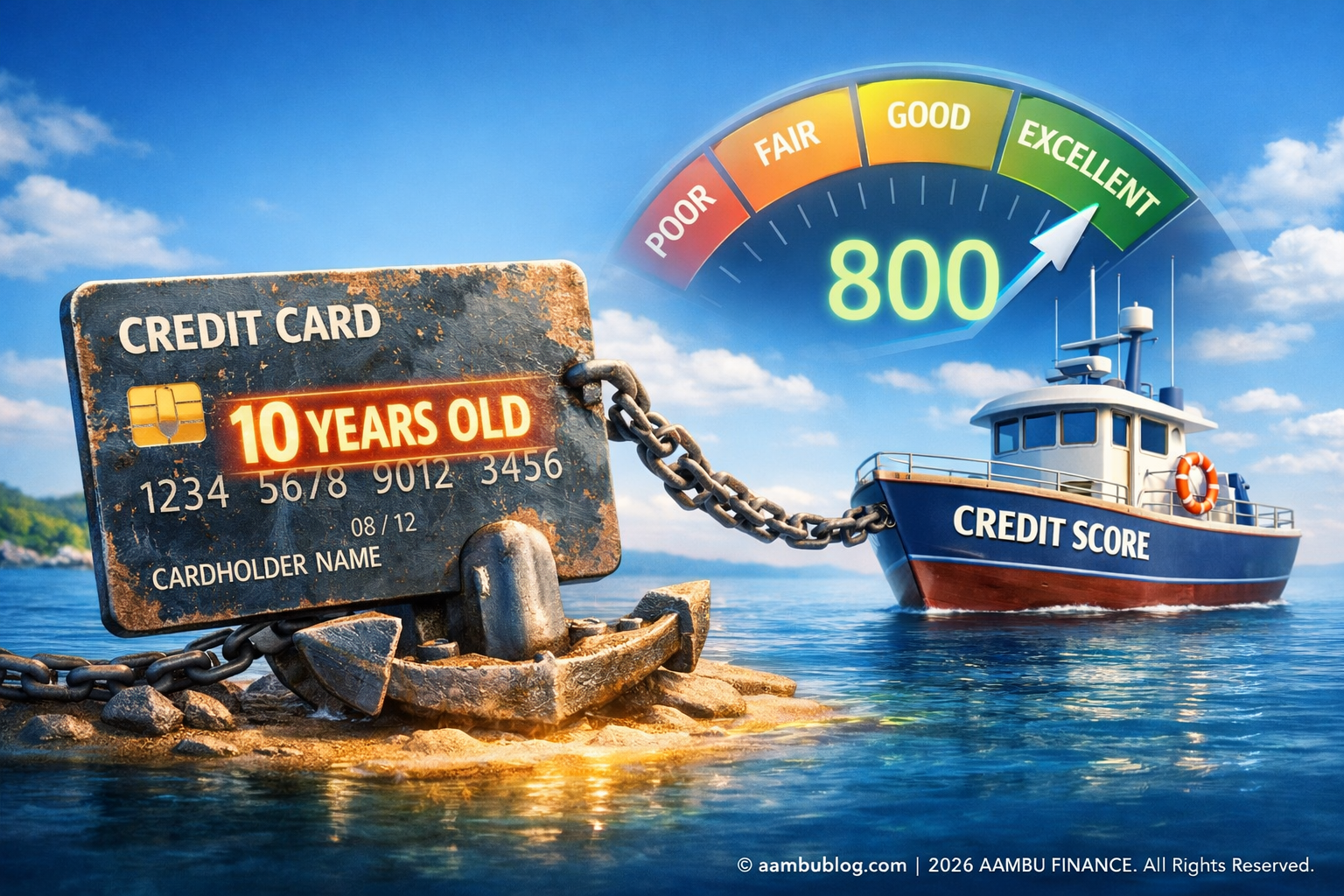
Your oldest credit card is like a vintage wine—it gets better for your credit score the older it gets. By keeping it open, you are maintaining a “financial anchor” that keeps your score high even when you apply for new loans or cards. Keep it open, keep it active, and let it work for you.
Frequently Asked Questions (FAQs)
Q1. Will my score drop immediately if I close a card? Answer: Not always immediately. FICO often keeps “closed accounts in good standing” on your report for 10 years. However, your Utilization Ratio will change instantly, which can cause a sudden drop.
Q2. How often should I use an old card to keep it active? Answer: Most banks will close an account for inactivity after 12 to 24 months. Using it once every 6 months is the safest way to keep it alive.
Q3. Does the credit limit on the old card matter? Answer: Yes. A higher limit helps your overall utilization. Even if the limit is small ($500), its age is what provides the most value.
Q4. Can I reopen a closed credit card? Answer: Some banks allow it within 30–60 days, but it’s not guaranteed. Usually, you would have to re-apply, which results in a new hard inquiry and a “new” account age.
Q5. Should I close a card if I’m worried about overspending? Answer: If you lack the discipline to not use it, then yes, your mental health and debt-free life are more important than a few credit points. But try “freezing” the card in a block of ice or giving it to a trusted family member first!