
🔴 Non-Veg / Contains Egg (Optional – See Pro-Tip) | 🥘 Breakfast / Snack
(Note: While traditional Poha is Veg, many of your readers who enjoyed the Kombdi Vade might like the “Egg Poha” variation common in some coastal regions.)
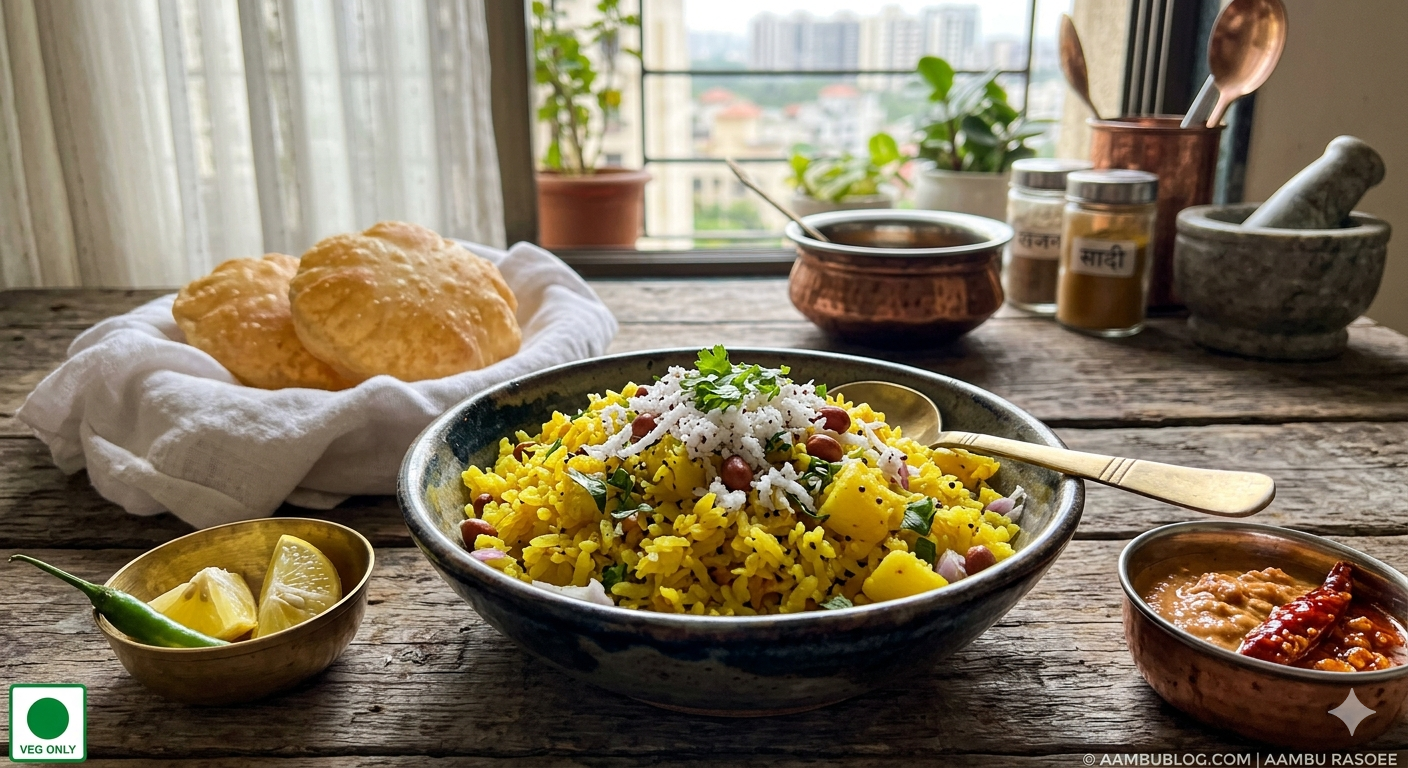
The secret to a non-sticky, fluffy Poha is all in the rinsing technique and the balance of turmeric. At Aambu Rasoee, we add a touch of sugar and plenty of fresh coconut to give it that authentic Puneri finish.
📊 Nutrition Information (Per Serving)
| Nutrient | Amount |
|---|---|
| Calories | 210 kcal |
| Protein | 4.5 g |
| Fiber | 3.5 g |
| Carbohydrates | 38.0 g |
🛒 Detailed Ingredients
1. The Base:
- Thick Poha (J जाड पोहे): 2 cups (Do not use thin/nylon Poha)
- Turmeric Powder: 1/2 tsp
- Sugar: 1 tsp
- Salt: To taste
2. The Phodni (Tempering):
- Oil: 2 tbsp
- Mustard Seeds & Cumin: 1 tsp each
- Hing (Asafoetida): A pinch
- Peanuts: 2 tbsp (Raw)
- Green Chilies: 3-4 (Chopped)
- Curry Leaves: 8-10
- Onions (Kanda): 2 large (Finely chopped)
- Potato: 1 small (Finely diced – optional for ‘Batata Poha’)
3. Garnishing:
- Fresh Scraped Coconut: 2 tbsp
- Finely Chopped Coriander: 1/4 cup
- Lemon: 1 wedge
- Fine Sev: For crunch
👩🍳 Preparation & Cooking Instructions
Step 1: The Rinsing Secret
Place the Poha in a colander and rinse it under running water for 30 seconds. Do not soak it. Sprinkle salt, sugar, and turmeric powder over the wet Poha. Toss gently with your fingers and let it rest for 10 minutes. This ensures every grain is yellow and seasoned without becoming mushy.
Step 2: The Nutty Tempering
Heat oil in a kadhai. First, fry the raw peanuts until they turn crunchy and golden. Remove and set aside (this keeps them crispy). In the same oil, add mustard seeds, cumin, hing, and curry leaves.
Step 3: Sautéing the Aromatics
Add the green chilies and chopped onions (and diced potatoes if using). Sauté until the onions become translucent and soft. Do not brown the onions; they should remain sweet and moist.
Step 4: The Final Toss
Add the rested Poha to the kadhai. Mix very gently using a light hand to avoid breaking the grains. Cover with a lid and let it steam on the lowest heat for 2-3 minutes. This “Waaph” (steam) is what makes the Poha soft.
Step 5: Finishing Touches
Turn off the heat. Add the fried peanuts back in. Garnish generously with fresh coconut, coriander, and a squeeze of lemon juice.
❓ Frequently Asked Questions (FAQ)
Q: Why does my Poha become dry and hard?
A: You likely didn’t rinse it enough or you cooked it too long without a lid. The steam (Waaph) is essential to keep it moist.
Q: Can I make this ahead of time for a tiffin?
A: Yes! To keep it fresh, add a little extra oil during the tempering and keep the lid on until it cools down.
Q: My Poha turned into a paste. What happened?
A: You used “Thin Poha” or soaked it in water. Always use “J जाड पोहे” (Thick Poha) for this recipe.
💡 Aambu Blog Secret Tip
”For a Non-Veg twist (Anda Poha), scramble two eggs with a pinch of salt and black pepper separately and toss them in with the Poha at the very end. It adds a great protein boost and a unique flavor!”