

Introduction
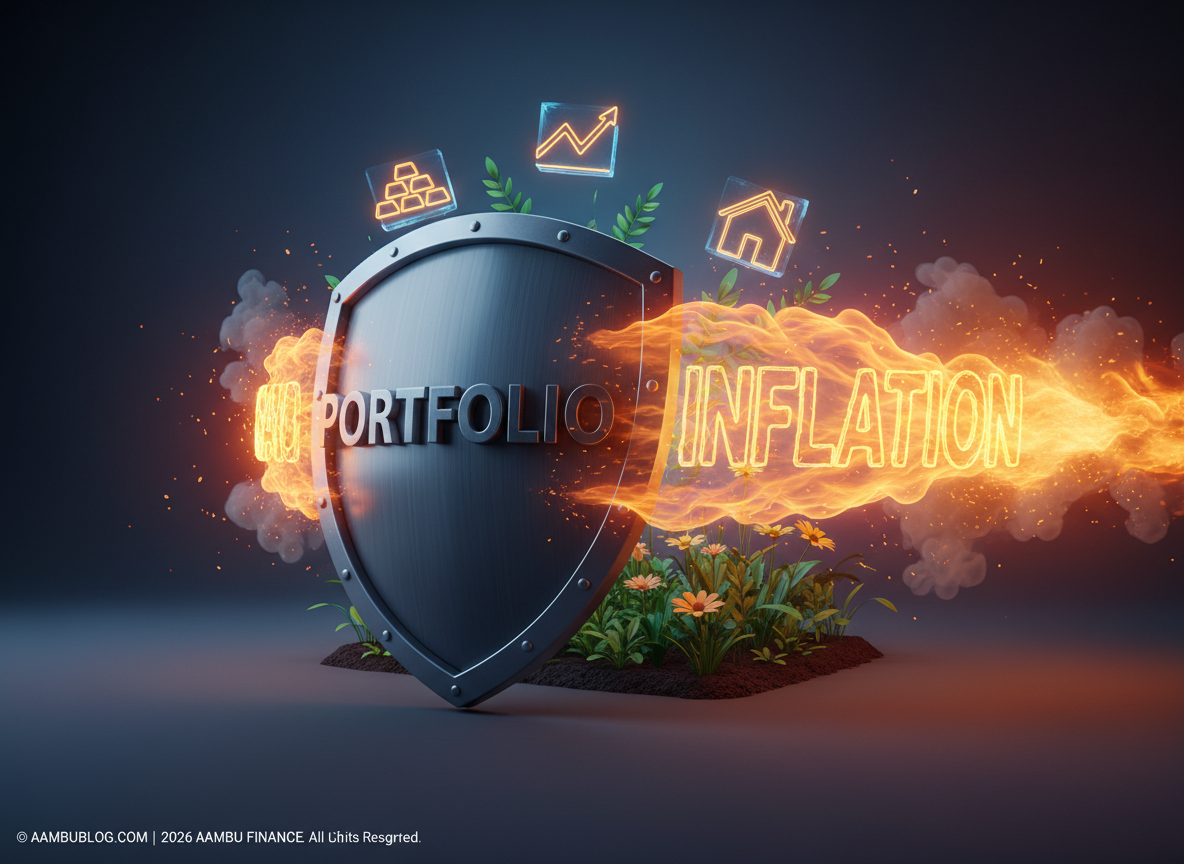
As of April 2026, US headline inflation has climbed to 3.56%, driven largely by a sharp increase in energy costs. For the average American, this means your cash sitting in a standard bank account is losing purchasing power every single day. To protect your hard-earned wealth, you cannot simply “save” your way to financial security; you must invest in assets that outpace the rising cost of living. Here is the 2026 blueprint for an inflation-resistant portfolio.
1. Series I Savings Bonds (The Low-Risk Winner)
In early 2026, I-Bonds remain one of the best “guaranteed” hedges against inflation.
- The Rate: For bonds issued through April 30, 2026, the composite interest rate is 4.03%.
- How it Works: This rate consists of a 0.90% fixed rate and a 3.12% semiannual inflation adjustment.
- The Limit: You can purchase up to $10,000 per person annually via TreasuryDirect.gov. It’s the closest thing to a “risk-free” inflation shield.
2. Real Estate & REITs (The Tangible Hedge)
Real estate has historically been a powerful inflation hedge because as prices rise, so do property values and rents.
- REITs: If you aren’t ready to be a landlord, you can invest in Real Estate Investment Trusts (REITs). These are companies that own income-producing real estate. By law, they must pay out 90% of their taxable income to shareholders as dividends.
- The 2026 Edge: Look for REITs in the “Residential” or “Industrial” sectors, which are seeing high demand even as other sectors fluctuate.
3. Commodities: Gold and Energy
When the value of the dollar drops, the value of “stuff” (commodities) usually goes up.
- Gold: In 2026, gold continues to be a “safe-haven” asset. While it doesn’t pay a dividend, it tends to hold its intrinsic value when inflation spikes.
- Energy Stocks: With gas prices crossing $4 a gallon this month, energy companies are seeing record profits. Adding a small percentage of energy ETFs to your portfolio can offset the higher costs you’re paying at the pump.
4. Stocks with “Pricing Power”
Inflation hurts companies that have high costs and can’t raise prices. However, it benefits companies with Pricing Power—those that can pass cost increases to consumers without losing customers.
- Think Essentials: Companies in the healthcare, utility, and consumer staples sectors (like Walmart or Costco) often perform better during inflationary periods because people still need to buy their products regardless of the price.
Conclusion
Inflation is the “hidden tax” on your savings. By diversifying your portfolio with a mix of I-Bonds, Real Estate, and high-quality stocks, you can ensure that your wealth continues to grow even as the price of bread and gas goes up. Don’t let your money sit still—put it to work in assets that grow with the economy.
Frequently Asked Questions (FAQs)
Q1. Should I buy gold or Bitcoin to fight inflation?Answer: Both are seen as “alternative” hedges. Gold is historically more stable, while Bitcoin has higher growth potential but much higher volatility. A small 1-5% allocation in either can be part of a balanced 2026 strategy.
Q2. Are TIPS a good idea right now?Answer: Treasury Inflation-Protected Securities (TIPS) are excellent because their principal value increases with the Consumer Price Index (CPI). They are very safe but usually offer lower total returns than the S&P 500 over long periods.
Q3. How long do I have to hold I-Bonds?Answer: You must hold them for at least 12 months. If you cash them out before 5 years, you lose the last 3 months of interest as a penalty.
Q4. Does inflation help or hurt people with debt?Answer: Surprisingly, inflation can help those with fixed-rate debt (like a 30-year mortgage). You are paying back the bank with “cheaper” dollars while the value of your home likely increases.
Q5. Will the Fed raise interest rates to stop this inflation?Answer: As of April 2026, the Fed is monitoring energy prices closely. If inflation stays above 3.5%, they may keep interest rates higher for longer, which makes “high-yield savings” and “CDs” more attractive.