

Introduction
Every time you apply for a credit card, a mortgage, or even a new cell phone plan, someone is likely checking your credit report. But did you know that not all “checks” are equal? In the US financial system, credit checks are divided into two categories: Hard Inquiries and Soft Inquiries. One can lower your credit score, while the other is completely invisible. Understanding the difference is key to protecting your score while shopping for the best financial deals in 2026.
What is a Hard Inquiry (Hard Pull)?
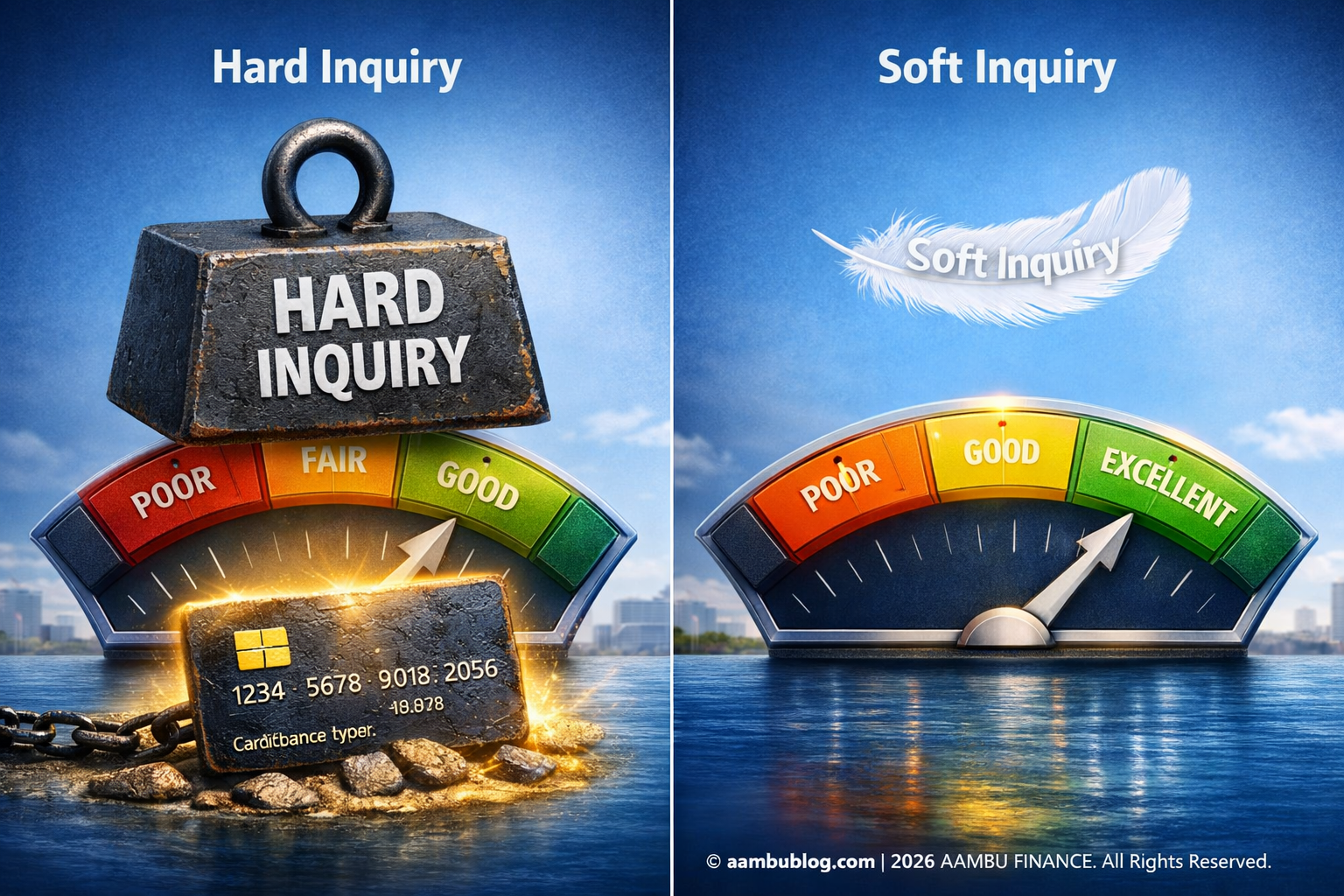
A hard inquiry happens when a lender views your credit report to make a lending decision.
- Common Examples: Credit card applications, mortgage applications, auto loans, and sometimes apartment rental applications.
- Impact on Score: A hard pull typically lowers your FICO score by 5 to 10 points.
- Duration: It stays on your credit report for 2 years, though it only affects your score for the first 12 months.
- Why it matters: Too many hard pulls in a short time make you look “credit hungry” or desperate for cash, which signals risk to banks.
What is a Soft Inquiry (Soft Pull)?
A soft inquiry occurs when your credit report is checked for reasons not related to an official loan application.
- Common Examples: Checking your own score (on apps like Credit Karma or your bank app), “Pre-approved” credit card offers in the mail, and employer background checks.
- Impact on Score: Zero. Soft pulls do not affect your credit score at all.
- Visibility: These are only visible to you when you pull your own report; lenders cannot see them.
The “Rate Shopping” Exception
If you are shopping for a mortgage or a car loan, you might need to check with multiple lenders to find the best rate. Don’t worry about multiple hard pulls! The FICO system recognizes this. If you do all your applications within a 14 to 45-day window, they are treated as a single hard inquiry to protect your score.
Conclusion
Be strategic. Avoid applying for unnecessary credit cards right before you plan to buy a house or a car. Use “Pre-qualification” tools whenever possible, as these usually rely on soft pulls. By managing your hard inquiries, you keep your credit score “clean” and ready for when you truly need a big loan.
Frequently Asked Questions (FAQs)
Q1. Does checking my own credit score hurt it? Answer: No! Checking your own score is always a soft pull. You should check it at least once a month to monitor for fraud.
Q2. Can a hard inquiry be removed? Answer: Only if it was unauthorized. If you applied for a card and were denied, the inquiry is legitimate and stays for 2 years. If you see an inquiry you didn’t authorize, you must dispute it (Refer to Article 17).
Q3. Do utility bills (Electric/Water) require a hard pull? Answer: Sometimes. Many utility companies and cell phone providers perform a hard pull when you open a new account to determine if you need to pay a security deposit.
Q4. How many hard inquiries are “too many”? Answer: Generally, having more than 6 hard inquiries in a 12-month period is considered high and may lead to automatic rejections from some banks.
Q5. Is a “Pre-Approval” always a soft pull? Answer: Usually, yes. But be careful: “Pre-qualification” is almost always a soft pull, while a formal “Pre-Approval” for a mortgage might involve a hard pull. Always read the fine print first.