

Introduction
Many small business owners in the USA make the mistake of using their personal credit cards to fund their company. While this works in the beginning, it limits your growth and puts your personal assets at risk. In 2026, the smartest move an entrepreneur can make is to build Business Credit. Business credit is a credit profile tied to your company’s EIN (Employer Identification Number) rather than your Social Security Number. Here is how to build a powerful business credit score from scratch.
Step 1: Formalize Your Business Entity
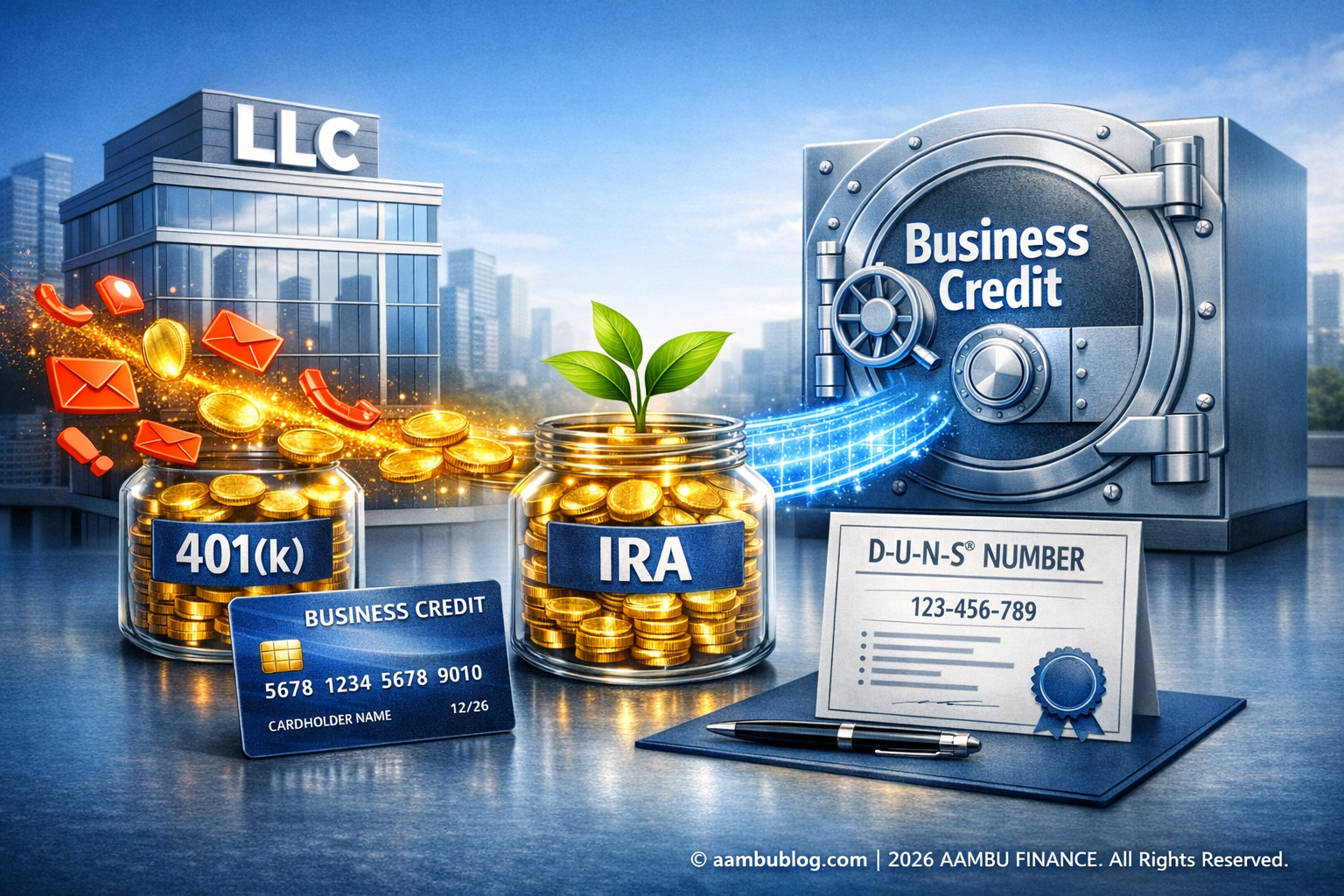
You cannot build business credit as a “Sole Proprietor.” To have a separate credit identity, you must register your business as a legal entity, such as an LLC or a Corporation. This creates a “legal wall” between you and your business.
Step 2: Get Your Federal Tax ID (EIN)
An EIN is like a Social Security Number for your business. It is free to obtain from the IRS website. This number will be used for all your business credit applications, bank accounts, and tax filings.
Step 3: Open a Dedicated Business Bank Account
Mixing personal and business money is a major red flag for lenders. Open a business checking account and ensure all company income and expenses flow through it. This creates a “Bank Rating,” which lenders use to see if your business is healthy.
Step 4: Get a DUNS Number
While personal credit is tracked by FICO, business credit is largely tracked by Dun & Bradstreet. You must apply for a D-U-N-S Number (Data Universal Numbering System). It is a unique nine-digit identifier for your business and is required for most business credit reports.
Step 5: Establish “Net-30” Vendor Accounts
The fastest way to start your score is by opening accounts with vendors that offer Net-30 terms (you buy supplies now and pay the bill in 30 days) and report to the business credit bureaus.
- Examples: Uline, Quill, and Grainger are famous for helping new businesses build credit by reporting on-time payments.
Conclusion
Building business credit takes time—usually 6 to 12 months to see a strong score—but the rewards are worth it. High-limit business credit cards, better insurance rates, and lower-interest business loans allow you to scale your company without ever risking your personal credit score.
Frequently Asked Questions (FAQs)
Q1. Does my personal credit score matter for business credit? Answer: In the beginning, yes. Many “Startup” business credit cards require a Personal Guarantee, meaning they will check your personal score first. However, as your business credit grows, you can eventually get loans based only on the business.
Q2. What is a good business credit score? Answer: While personal scores go up to 850, the Paydex Score (by Dun & Bradstreet) goes from 0 to 100. A score of 80 or higher is considered excellent.
Q3. Can I build business credit without an LLC? Answer: It is extremely difficult. Most business credit bureaus require a formal legal structure to create a separate file for the business.
Q4. How many vendor accounts do I need? Answer: Most experts recommend having at least 3 to 5 reporting trade lines (vendor accounts) to generate an initial business credit score.
Q5. Do business credit cards report to my personal credit? Answer: Most do not report positive activity to your personal report, but they will report if you default or pay late. This is great because high business spending won’t hurt your personal utilization!