🔴 Non-Veg
Introduction
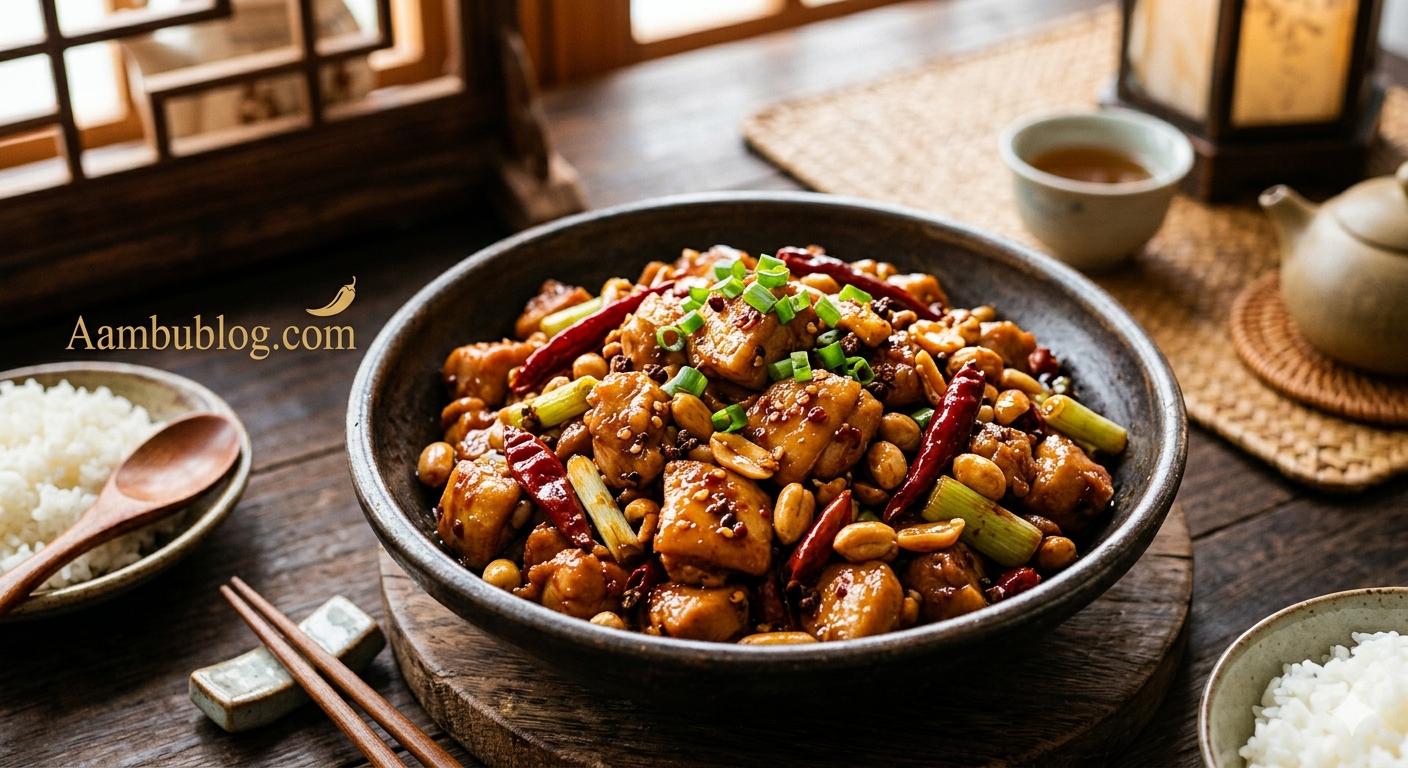
Kung Pao Chicken is a world-renowned masterpiece of Sichuan cuisine. Named after Ding Baozhen, a Qing Dynasty official (Gongbao), this dish is a perfect harmony of spicy, sweet, and sour flavors. Unlike the westernized versions, the original Chinese recipe uses Sichuan peppercorns to create that signature “mala” (numbing and spicy) sensation, paired with crispy peanuts and tender chicken.
Cooking Details
- Prep time: 20 Minutes
- Cook time: 10 Minutes
- Total time: 30 Minutes
- Servings: 2-3 People
Ingredients
For the Chicken & Marinade:
- 500g Chicken breast or thighs (cut into 1-inch cubes)
- 1 tbsp Soy sauce
- 1 tbsp Shaoxing wine (or dry sherry)
- 1 tsp Cornstarch
- A pinch of white pepper
For the Sauce (The Heart of the Dish):
- 1 tbsp Light soy sauce
- 1 tsp Dark soy sauce (for color)
- 1 tbsp Chinkiang black vinegar (or balsamic vinegar)
- 1 tbsp Sugar
- 1 tsp Cornstarch
- 2 tbsp Water or chicken stock
The Aromatics:
- 10-12 Dried red chilies (seeded and cut into pieces)
- 1 tsp Sichuan peppercorns
- 3 cloves Garlic (thinly sliced)
- 1 inch Ginger (minced)
- 2 Green onions (white parts sliced)
- 1/2 cup Roasted peanuts (unsalted)
- 3 tbsp Vegetable oil
Step-by-Step Instructions
- Marinate the Chicken: In a bowl, mix the chicken cubes with soy sauce, wine, cornstarch, and white pepper. Let it rest for 15–20 minutes.
- Prepare the Sauce: In a small bowl, whisk together all the “Sauce” ingredients until the sugar and cornstarch are fully dissolved. Set aside.
- Fry the Aromatics: Heat oil in a wok or large skillet over medium heat. Add Sichuan peppercorns and dried chilies. Fry until the chilies turn slightly dark and fragrant (do not burn them).
- Sear the Chicken: Turn the heat to high. Add the marinated chicken cubes to the wok. Stir-fry until the chicken turns white and is nearly cooked through.
- Add Garlic & Ginger: Add the sliced garlic, minced ginger, and the white parts of the green onions. Toss for 30 seconds until fragrant.
- Thicken the Sauce: Give the sauce mixture a quick stir and pour it into the wok. Stir-fry rapidly as the sauce thickens and coats each piece of chicken with a glossy glaze.
- The Final Touch: Toss in the roasted peanuts and give it one last mix. Turn off the heat immediately to keep the peanuts crunchy.
- Serve: Garnish with the green parts of the spring onions and serve hot with steamed jasmine rice.
Chef Tips
- Wok Hei (Breath of the Wok): Keep the heat very high once you add the chicken. This dish should be cooked fast to keep the meat juicy.
- Balance the Vinegar: Authentic Kung Pao has a distinct “Lychee flavor”—a balance where you taste the sweetness first, followed by the tartness of the black vinegar.
- Peanut Prep: Always add the peanuts at the very end. If they sit in the sauce too long while cooking, they lose their crunch.
Nutrition & Storage
- Nutrition: Approx. 320 kcal per serving | Protein: 28g | Carbs: 12g | Fats: 18g
- Storage: Store leftovers in an airtight container in the fridge for up to 2 days. Reheat in a pan rather than a microwave to maintain the texture of the chicken.
FAQs (Questions & Answers)
Q: Can I make this dish without Sichuan peppercorns?
A: You can, but you will miss the authentic “numbing” sensation that defines Sichuan food. If unavailable, use a little extra black pepper, though the flavor will change.
Q: Is Kung Pao Chicken very spicy?
A: It has a kick, but you can control the heat by removing the seeds from the dried red chilies or using fewer chilies.
Q: Why is my sauce too thick?
A: If the sauce thickens too quickly, add a splash of water or chicken stock and stir immediately to reach your desired consistency.
Conclusion
Authentic Kung Pao Chicken is a beautiful balance of textures and flavors. It’s spicy, tangy, and crunchy all at once. Bringing this traditional Sichuan dish to your kitchen is a great way to experience real Chinese culinary heritage. Enjoy your meal!