🔴 Non-Veg / Contains Lamb & Eggplant | 🥘 Main Course / Iranian (Persian) Cuisine
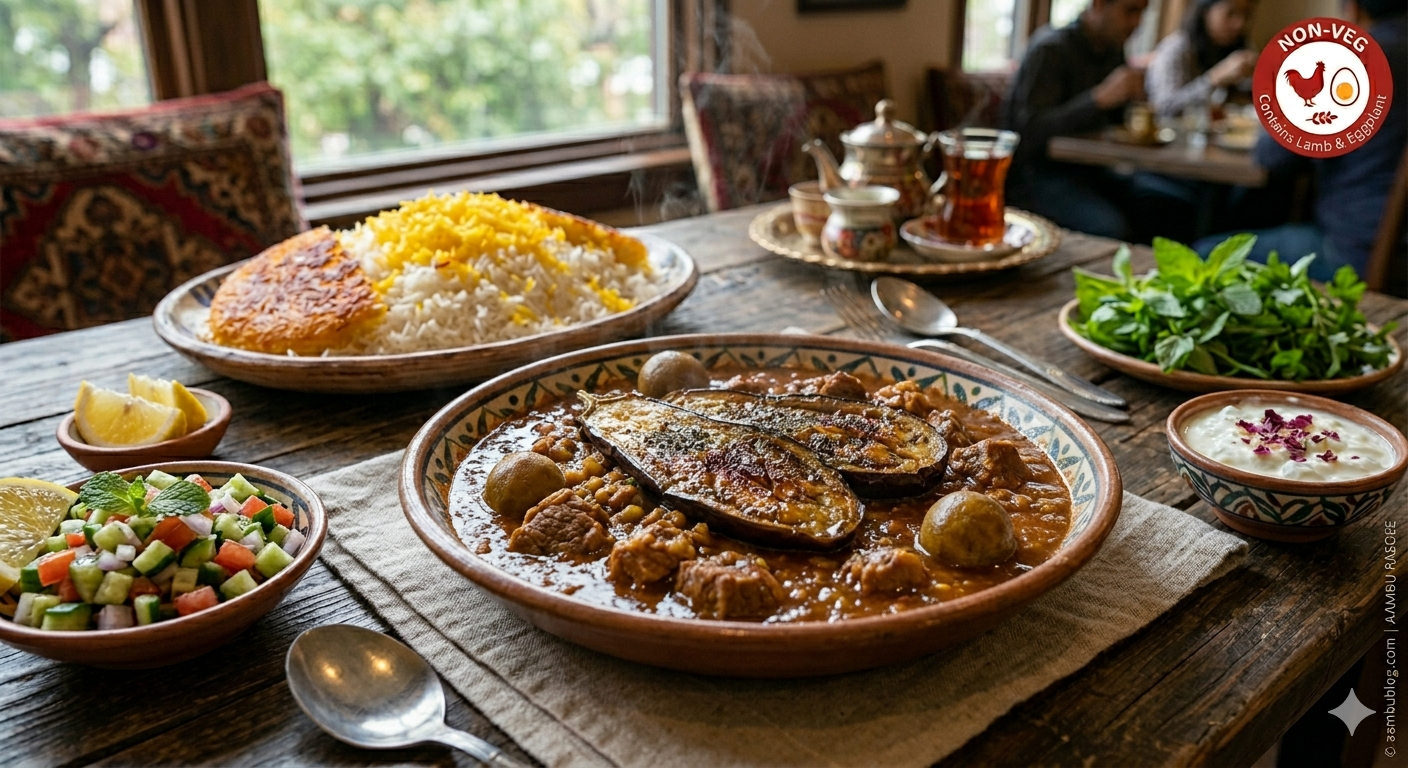
Khoresht-e Bademjan is the ultimate comfort food for eggplant lovers. In Iran, the eggplant is often called the “potato of the East” because of its versatility. This stew features succulent pieces of lamb or beef slow-cooked in a tangy tomato base, topped with fried eggplants that have absorbed all the rich flavors of the sauce. At AAMBU RASOEE, we use the traditional method of “sweating” the eggplants to ensure they are creamy, not greasy.
📊 Nutrition Information (Per Serving)
| Nutrient | Amount |
|---|---|
| Calories | 410 kcal |
| Protein | 24.0 g |
| Fiber | 9.0 g |
| Total Fat | 28.0 g |
🛒 Detailed Ingredients
1. The Star: Eggplants:
- Chinese or Italian Eggplants: 3–4 large (Long and slender varieties are best).
- Salt: For “sweating” the eggplants.
- Oil: For frying.
2. The Meat & Sauce Base:
- Lamb or Beef: 400g (Cut into 1-inch cubes).
- Onion: 1 large (Finely diced).
- Tomato Paste: 2 tbsp.
- Tomatoes: 2 medium (Sliced into rounds).
- Turmeric: 1 tsp.
- Saffron Liquid: 1 tbsp (Concentrated).
3. The Tang (The Secret Flavor):
- Unripe Grapes (Ghooreh): 1/4 cup (Fresh or bottled; provides a unique sourness).
- Alternative: 2 tbsp Lemon juice if grapes are unavailable.
- Salt & Black Pepper: To taste.
👩🍳 Preparation & Cooking Instructions
Step 1: Prepping the Eggplants (The Secret to Texture)
- Peel the eggplants, leaving the green caps on if you like the traditional look. Slice them lengthwise into 1-inch thick pieces.
- The Salting Method: Generously salt the slices and let them sit for 30 minutes. You will see “beads” of bitter liquid rise to the surface.
- Rinse the eggplants under cold water and pat them completely dry with a paper towel. This prevents them from absorbing too much oil during frying.
Step 2: Searing the Stew Base
- In a large pot, sauté the onions until golden. Add the meat and turmeric.
- Brown the meat on all sides. Stir in the tomato paste and fry it for 2 minutes until it turns a deep, dark red.
- Add 3 cups of water. Bring to a boil, then reduce heat and simmer for 1.5 hours until the meat is nearly tender.
Step 3: Frying the Eggplants
- While the meat simmers, heat oil in a skillet. Fry the eggplant slices until they are golden brown on both sides.
- Drain them on a wire rack or paper towels to remove excess oil.
Step 4: Layering the Flavors
- Once the meat is tender, add the salt, pepper, saffron liquid, and the sour grapes (Ghooreh).
- The Final Assembly: Carefully lay the fried eggplants on top of the stew. Do not stir! You want them to sit on top so they don’t break apart.
- Place the tomato slices on top of the eggplants. Cover and simmer for another 20–30 minutes. The eggplants should be soft enough to cut with a spoon.
Step 5: Serving
Carefully plate the meat and sauce first, then place the whole eggplant and tomato slices on top. Serve with Chelow (Persian Saffron Rice).
❓ Frequently Asked Questions (FAQ)
Q: Can I make this vegetarian?
A: Absolutely! Skip the meat and use vegetable broth. You can add split peas (like in Gheimeh) or just enjoy the eggplants as the main star.
Q: Why are my eggplants so oily?
A: This usually happens if the oil wasn’t hot enough when you started frying, or if you didn’t pat them dry. Eggplants act like sponges; the hotter the oil, the less they absorb.
Q: What if I can’t find Ghooreh (sour grapes)?
A: Use a tablespoon of lemon juice or even a teaspoon of pomegranate molasses. You are looking for a sharp, tangy contrast to the richness of the eggplant.
💡 Secret Tip
”The secret to a perfect Khoresht-e Bademjan is Patience. Never stir the stew once the eggplants are added. If you stir, the eggplants will turn into a mushy paste. By letting them steam on top of the meat, they maintain their shape while absorbing all the savory steam from the sauce below!”