
🟢 Veg Only | 🥘 Breakfast / Brunch
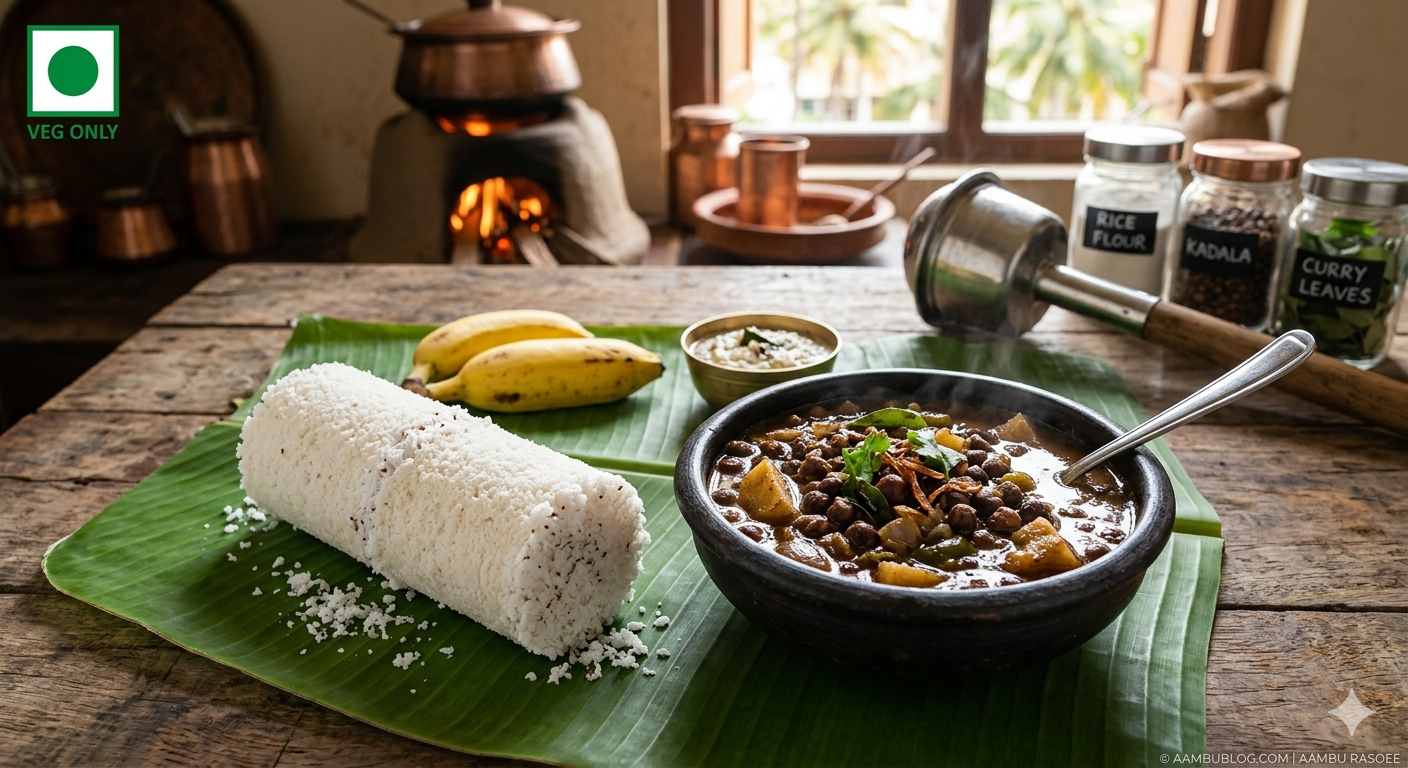
Puttu & Kadala is not just a meal; it is a memory for every Keralite. Puttu relies on slow-steaming rice flour, and Kadala curry provides a bold, spicy, and earthy counterpoint. The secret to our deep, dark Kadala curry at Aambu Rasoee is the double-roasting of the spices and the addition of a potent, fresh Kerala Vatan (roasted coconut paste).
📊 Nutrition Information (Per Serving – Puttu + 1 Cup Kadala Curry)
| Nutrient | Amount |
|---|---|
| Calories | 410 kcal |
| Protein | 18.5 g |
| Fiber | 10.0 g |
| Total Fat | 16.5 g |
🛒 Detailed Ingredients
1. For the Steamed Puttu (The Base):
- Rice Flour (Puttu Peeth): 2 cups (Do not use regular fine rice flour)
- Fresh Grated Coconut: 1 cup
- Salt: To taste
- Warm Water: As needed (See Step 1)
2. For the Rich Kadala Curry (The Stars):
- Black Chickpeas (Kadala): 1.5 cups (Soaked overnight)
- Oil (Coconut Oil): 2 tbsp
- Ginger-Garlic Paste: 1 tbsp
- Green Chilies: 3-4 (Slit lengthwise)
- Onion: 2 medium (Finely chopped)
- Curry Leaves: 2 sprigs
3. The Dark Kerala Vatan (Roasted Coconut Paste):
- Grated Coconut: ½ cup (Grated)
- Coriander Seeds: 2 tbsp
- Fennel Seeds (Perumjeerakam): 1 tsp
- Whole Spices: Cinnamon (1 inch), Cloves (4), Cardamom (2)
- Tamarind: A marble-sized ball (Optional for tang)
4. The Spices:
- Turmeric Powder: 1/2 tsp
- Kashmiri Red Chili Powder: 1 tsp (For color, adjust to taste)
- Salt: To taste
👩🍳 Preparation & Cooking Instructions
Step 1: The Moist Moistening (Puttu Secret)
Add salt to the puttu flour. Slowly add warm water, a tablespoon at a time, while mixing with your fingers. This is not for a dough; you just want to moisten the flour. The consistency is perfect when a small handful holds its shape when pressed and crumbles easily. Let it rest for 15 minutes to absorb moisture.
Step 2: The Dark Roasted Vatan
Dry roast the coriander seeds, fennel seeds, and whole spices until fragrant and dark brown (not burnt). Add grated coconut and roast until deep golden brown. Cool completely. Grind this mixture with very little water into a thick, smooth, dark paste (the Kerala Vatan).
Step 3: Cooking the Kadala Curry
- Pressure cook the soaked Kadala with turmeric and 4 cups of water for 5-6 whistles until soft but not mashed.
- Heat coconut oil in a deep pot (chatti). Add onions, green chilies, and ginger-garlic paste. Sauté until onions are translucent.
- Add the boiled Kadala along with its cooking water. Add Kashmiri chili powder and salt.
- Stir in the Kerala Vatan (paste). Let it simmer on low heat for 10-15 minutes, allowing the flavors to meld.
Step 4: Steaming the Puttu
Layer the Puttu maker (kutti). Place a round stencil at the base. Add 2 tbsp of grated coconut, followed by a handful of Moistened Puttu flour. Repeat layering (Coconut -> Flour -> Coconut) until full. Steam over a pot of boiling water for 12-15 minutes until steam vents consistently from the top.
Step 5: The Frying Touch (Phodni)
In a small pan, heat 1 tbsp of coconut oil. Add mustard seeds, let them splutter. Add curry leaves and 2 slit dry red chilies. Sauté for 10 seconds. Pour this sizzling ghee tempering over the Kadala Curry just before serving.
❓ Frequently Asked Questions (FAQ)
Q: Can I use Moong dal instead of Toor dal?
A: No, Moong dal won’t provide the traditional taste and consistency. Stick with Toor dal.
Q: Why does my Bisi Bele Bhath become dry?
A: The rice and lentils tend to absorb water. If it becomes dry, add hot water and stir well to maintain the desired consistency.
Q: Can I make it without jaggery?
A: Jaggery doesn’t make it sweet; it simply rounds off the flavors of the tamarind, spices, and lentils. It is highly recommended for the authentic taste.
💡 Aambu Blog Secret Tip
”For that special festive flavor, add a small piece of roasted copra (dry coconut) or fresh coconut to the tempering. It provides a unique texture and subtle sweetness!”