
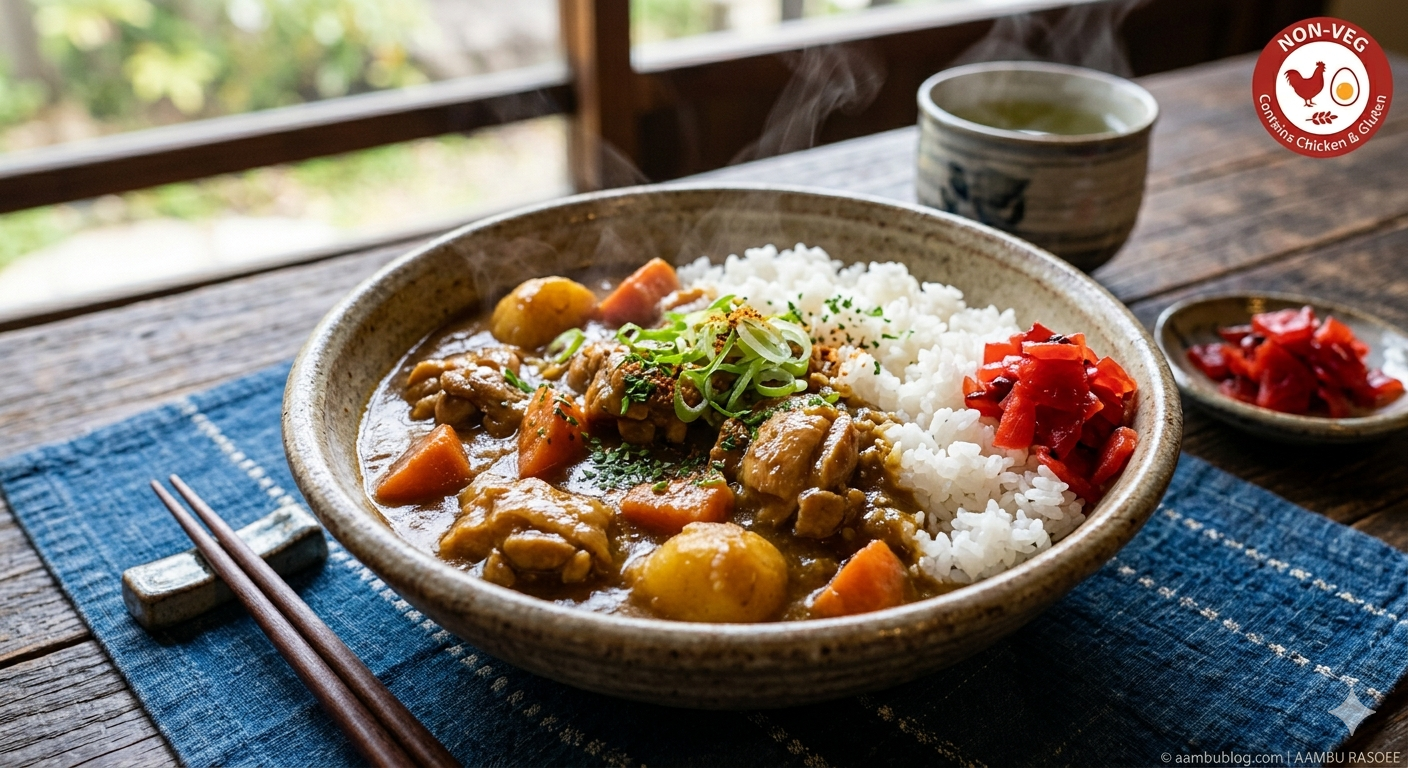
🔴 Non-Veg / Contains Chicken & Gluten | 🥘 Main Course / Japanese Cuisine
Japanese Curry (Karē) is unlike any other curry in the world. It is thicker, milder, and slightly sweeter than its Indian or Thai counterparts. It falls under “Yōshoku” (Western-influenced Japanese food) and is the definition of comfort in a bowl. At AAMBU RASOEE, we believe the secret to a great curry is the “low and slow” simmer that allows the vegetables to almost melt into the sauce.
📊 Nutrition Information (Per Serving)
| Nutrient | Amount |
|---|---|
| Calories | 610 kcal |
| Protein | 26.0 g |
| Fiber | 5.0 g |
| Total Fat | 22.0 g |
🛒 Detailed Ingredients
1. The Protein & Vegetables:
- Chicken Thighs: 400g (Cut into bite-sized chunks)
- Onions: 2 large (Thinly sliced—the more, the better!)
- Carrots: 2 medium (Cut into rolling wedges or “Ran-giri”)
- Potatoes: 2 medium (Starchy varieties like Russet work best)
- Oil: 2 tbsp (Neutral oil)
2. The Liquid & Flavor:
- Water or Dashi Stock: 4 cups
- Japanese Curry Roux: 1 pack (100g) (Brands like S&B Golden Curry or Vermont Curry)
- Honey: 1 tsp (For a subtle depth of sweetness)
- Soy Sauce: 1 tsp
3. To Serve:
- Steamed Rice: Short-grain Japanese rice
- Fukujinzuke: (Red pickled radish garnish—essential for the crunch!)
👩🍳 Preparation & Cooking Instructions
Step 1: Caramelizing the Foundation
- Heat oil in a large heavy-bottomed pot over medium heat.
- Add the sliced onions. Sauté them for at least 10–15 minutes until they are soft and deep golden brown. This “onigiri” base provides the natural sweetness and thickness of the curry.
Step 2: Searing and Simmering
- Add the chicken chunks to the pot and cook until the surface is browned.
- Toss in the carrots and potatoes. Stir for 2 minutes to coat them in the flavored oil.
- Pour in the water or dashi stock. Bring it to a boil, then skim off any foam or impurities that rise to the surface.
- Reduce heat to low, cover, and simmer for 20 minutes or until the vegetables are fork-tender.
Step 3: The Roux Magic
- Turn off the heat. Break the curry roux blocks into small pieces and add them to the pot.
- Stir continuously until the roux is completely dissolved. Pro Tip: Never add roux to a rolling boil, as it can clump and lose its glossy texture.
- Once dissolved, turn the heat back to low and simmer for another 5–10 minutes. The sauce will thicken into a rich, velvety gravy.
Step 4: The Final Adjustments
Stir in the honey and soy sauce. This adds a “hidden flavor” (Kokumi) that rounds out the spices.
Step 5: Plating
Place a mound of steamed rice on one half of a shallow bowl and pour the thick curry over the other half. Garnish with Fukujinzuke pickles on the side.
❓ Frequently Asked Questions (FAQ)
Q: Can I use Beef instead of Chicken?
A: Absolutely. Beef Curry is even more traditional in Western Japan (Osaka). Just ensure you simmer the beef for at least 45–60 minutes before adding the roux so it becomes tender.
Q: What if I don’t have store-bought roux?
A: You can make a “dry roux” by cooking equal parts butter and flour until brown, then adding Japanese curry powder. However, the blocks are preferred for their complex fat and spice balance.
Q: Why are my potatoes disappearing?
A: If you cut potatoes too small, they will dissolve into the sauce. If you like whole chunks, cut them larger than the carrots or add them 10 minutes after the carrots start simmering.
💡 Secret Tip
”The best Japanese curry is always eaten the next day! If you have time, make the curry, let it cool completely, and refrigerate it overnight. The flavors develop a deeper, more mature profile, and the sauce achieves a perfect ‘gloss’ that you can’t get fresh off the stove.”