
🟢 Veg Only | 🥘 Breakfast / Side Dish
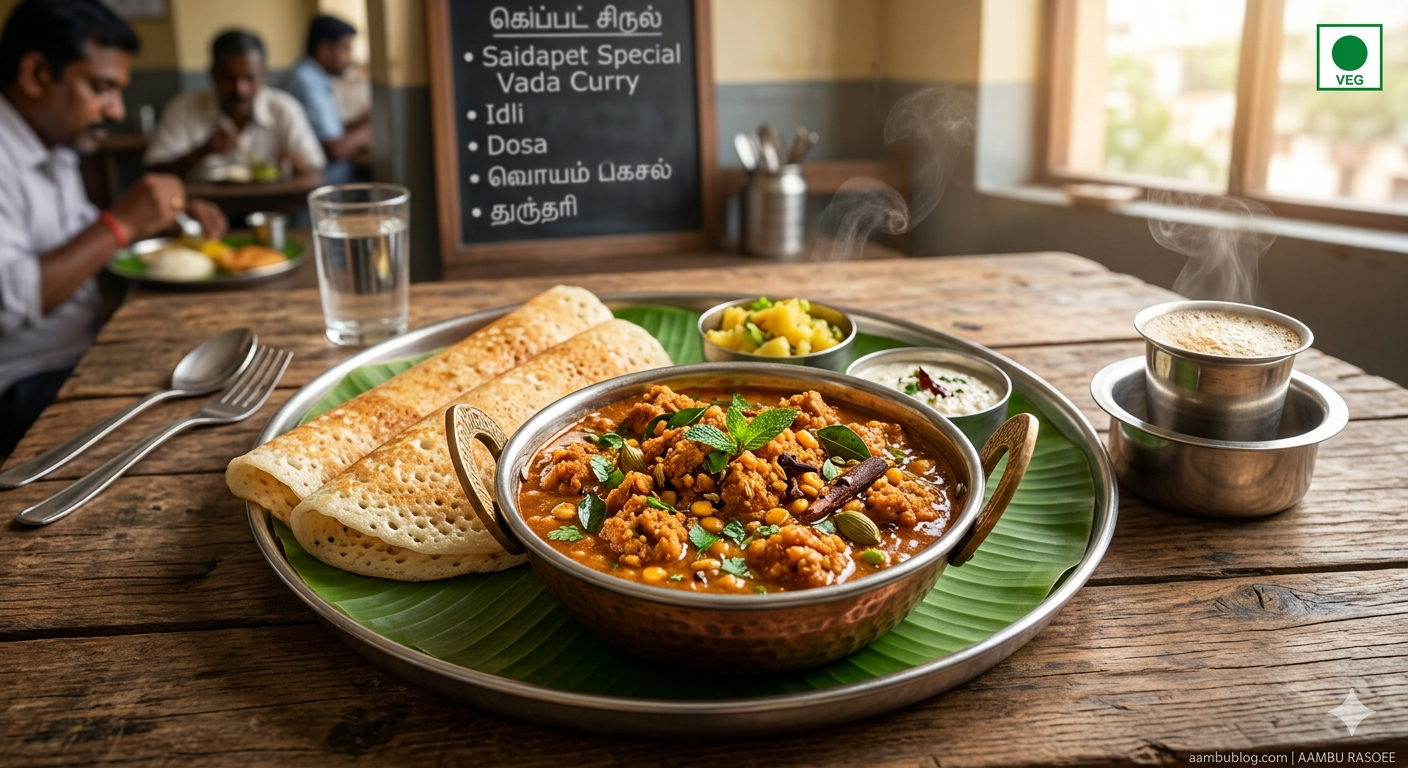
Vada Curry is a brilliant culinary invention of Chennai. Historically made to repurpose leftover Masala Vadas, it has now become a delicacy of its own. The magic of this dish lies in the coarse texture of the crumbled vadas absorbing the fiery, tangy, and minty coconut gravy.
📊 Nutrition Information (Per Serving)
| Nutrient | Amount |
|---|---|
| Calories | 320 kcal |
| Protein | 12.0 g |
| Fiber | 7.5 g |
| Total Fat | 18.0 g |
🛒 Detailed Ingredients
1. For the Dal Vada (The Star):
- Chana Dal (Bengal Gram): 1 cup (Soaked for 2-3 hours)
- Fennel Seeds (Saunf): 1 tsp
- Dry Red Chilies: 3-4
- Salt: To taste
- Oil: For deep frying (Can also be steamed for a healthier version)
2. The Chennai Hotel-Style Paste:
- Fresh Grated Coconut: 1/2 cup
- Fennel Seeds (Saunf): 1 tsp
- Roasted Gram (Pottukadalai/Daliya): 1 tbsp (Helps thicken the gravy)
- Poppy Seeds (Khus Khus): 1 tsp (Soaked in warm water)
- Garlic: 3 cloves
3. The Gravy Base & Aromatics:
- Oil: 3 tbsp
- Whole Spices: 1 Bay leaf, 1-inch Cinnamon, 3 Cloves, 1 Cardamom
- Onions: 2 large (Finely chopped)
- Tomatoes: 2 large (Finely chopped)
- Ginger-Garlic Paste: 1.5 tbsp
- Curry Leaves: 2 sprigs
- Fresh Mint Leaves (Pudina): A handful (Crucial for the Saidapet flavor!)
- Fresh Coriander: For garnish
4. The Spice Powders:
- Turmeric Powder: 1/2 tsp
- Kashmiri Red Chili Powder: 1.5 tbsp
- Coriander Powder: 1 tbsp
- Garam Masala: 1 tsp
👩🍳 Preparation & Cooking Instructions
Step 1: Frying the Vadas
- Drain the soaked chana dal completely (no water should remain).
- Grind the dal coarsely along with fennel seeds, dry red chilies, and salt. Do not make a smooth paste.
- Heat oil in a deep pan. Make small, irregular flat patties from the dough and deep fry them on medium heat until golden and crisp.
- Let them cool slightly, then roughly crumble them into bite-sized pieces. Set aside. (Note: You can also steam these patties in an idli cooker for 10 minutes to avoid deep frying!)
Step 2: The Magic Paste
In a blender, combine the grated coconut, fennel seeds, roasted gram, soaked poppy seeds, and garlic. Grind into a very smooth paste by adding a little water.
Step 3: Building the Gravy
- Heat oil in a wide pan. Add the whole spices (bay leaf, cinnamon, cloves, cardamom) and let them crackle.
- Add finely chopped onions and sauté until golden brown.
- Add the ginger-garlic paste, curry leaves, and the fresh mint leaves. Sauté for 2 minutes until the raw smell goes away. The mint will release a beautiful aroma.
- Add the chopped tomatoes and a pinch of salt. Cook until the tomatoes are completely mushy and the oil separates.
Step 4: Spicing it Up
Lower the flame and add turmeric, Kashmiri chili powder, coriander powder, and garam masala. Sauté for a minute.
Step 5: Simmering the Vada Curry
- Pour in 3 cups of water and bring it to a rolling boil.
- Add the ground coconut paste and mix well. Let the gravy boil for 5-7 minutes.
- Drop the crumbled vadas into the boiling gravy. Mix gently.
- Cover and simmer on low heat for about 5 minutes. The vadas will soak up the gravy and swell up. (If it looks too dry, add a splash of hot water, as vadas absorb a lot of moisture).
- Garnish generously with fresh coriander leaves and turn off the heat. Serve hot with Set Dosa, Idli, or Parotta.
❓ Frequently Asked Questions (FAQ)
Q: Can I use leftover store-bought Masala Vada?
A: Absolutely! That is actually the traditional way this dish was invented. Just crumble leftover vadas and drop them into the gravy.
Q: Why add Mint to a gravy?
A: Mint is the secret ingredient of Chennai’s street-side Vada Curry. It gives it that signature ‘hotel kurma’ fragrance that you simply cannot get with just coriander.
Q: My Vada Curry became very dry after 10 minutes. What should I do?
A: Chana dal acts like a sponge. Always keep the gravy a little watery before adding the vadas. If it dries out later, just mix in half a cup of warm water before serving.
💡 Aambu Blog Secret Tip
”When crumbling the vada, crush a few pieces into a fine powder and keep some larger chunks. The powdered bits will make the gravy thick and highly flavorful, while the larger pieces will give you the perfect bite!”