
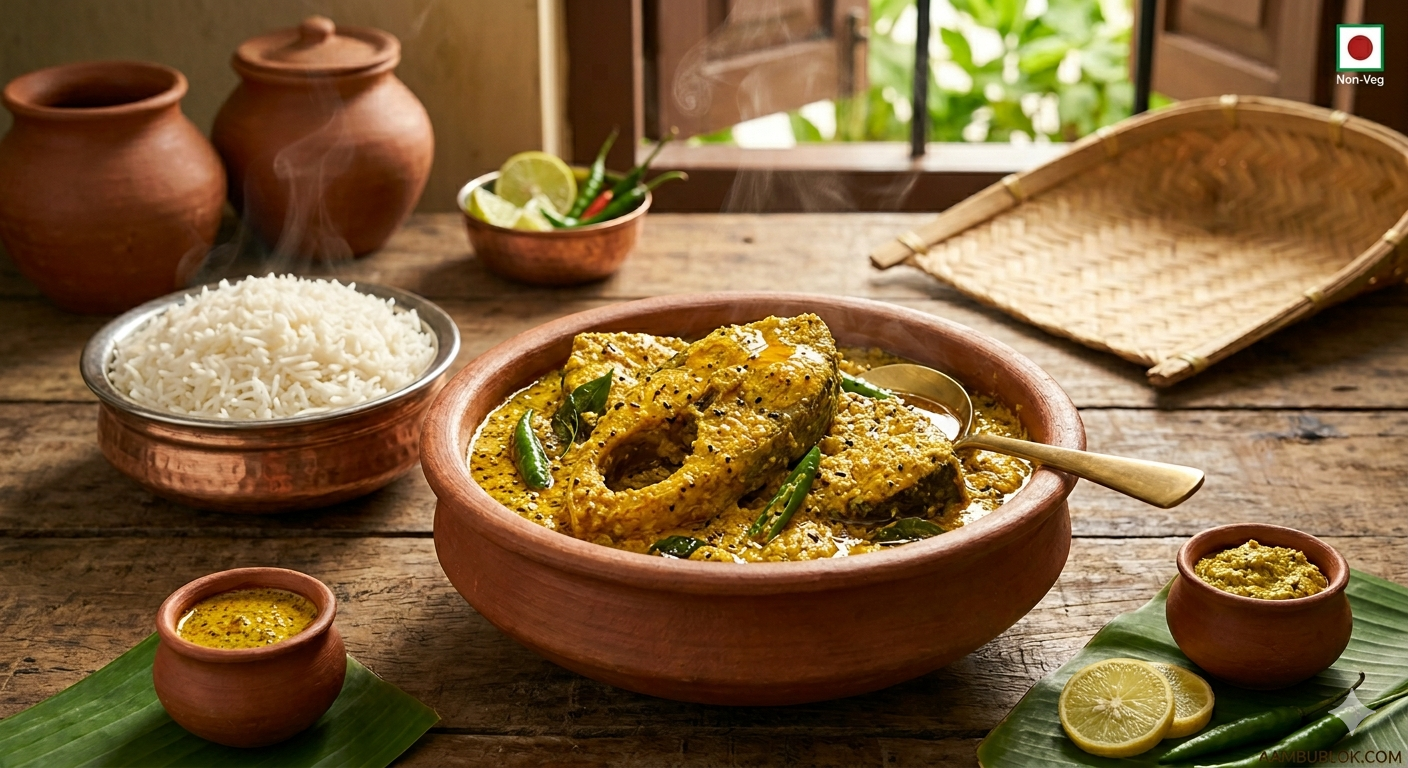
🥘 Main Course | 🐟 Non-Veg (Seafood)
The heart of this dish lies in the “Jhal” (pungency) of the mustard. By using a combination of black and yellow mustard seeds and finishing with a drizzle of raw mustard oil, you achieve a depth of flavor that is unmistakably Bengali. It is traditionally served with steaming hot Basmati or Gobindobhog rice.
📊 Nutrition Information (Per Serving)
| Nutrient | Amount |
|---|---|
| Calories | 310 kcal |
| Protein | 24.0 g |
| Fiber | 2.5 g |
| Total Fat | 18.0 g |
🛒 Detailed Ingredients
1. The Fish:
- Fish: 500g (Rohu, Katla, or Hilsa/Ilish – cut into steaks)
- Turmeric Powder: 1 tsp
- Salt: To taste
2. The Mustard Paste (The Soul):
- Yellow Mustard Seeds: 2 tbsp
- Black Mustard Seeds: 1 tbsp
- Green Chilies: 3-4 (Adjust to your heat preference)
- Salt: A small pinch (Prevents the mustard from turning bitter while grinding)
3. The Gravy & Tempering:
- Mustard Oil: 4-5 tbsp (Essential for the authentic pungency)
- Nigella Seeds (Kalo Jeera/Kalonji): ½ tsp
- Green Chilies: 3 (Slit lengthwise)
- Turmeric Powder: ½ tsp
- Kashmiri Red Chili Powder: ½ tsp (Mainly for color)
👩🍳 Preparation & Cooking Instructions
Step 1: Marinate and Shallow Fry
Clean the fish pieces and rub them with 1 tsp turmeric and salt. Let them rest for 15 minutes. Heat 3 tbsp of mustard oil in a pan until it reaches a smoking point. Fry the fish pieces lightly on both sides until golden. Do not over-fry; the fish should remain soft inside. Remove and set aside.
Step 2: Prepare the Mustard Paste
Soak the mustard seeds in warm water for 10 minutes. Drain and grind them with green chilies and a pinch of salt into a very smooth paste. If needed, add a tablespoon of water while grinding.
Step 3: The Tempering
In the same oil (add more if needed), add the Nigella seeds (Kalonji) and slit green chilies. Let them sizzle for 10 seconds until fragrant.
Step 4: The Gravy
Lower the heat. In a small bowl, mix turmeric powder and red chili powder with 2 tbsp of water and add it to the pan. Sauté for 30 seconds. Now, add about 1 to 1.5 cups of water and bring it to a boil.
Step 5: Simmering the Fish
Gently slide in the fried fish pieces. Let them simmer in the gravy for 3-4 minutes on medium heat.
Step 6: The Mustard Finish
Whisk the mustard paste with a little water and pour it into the pan. Stir gently to avoid breaking the fish. Cook for another 2 minutes on low heat. Do not overcook the mustard after adding it, as it can turn bitter.
Step 7: The Final Garnish
Turn off the heat. Drizzle 1 tbsp of raw mustard oil and add a few more slit green chilies. Cover the pan and let it rest for 5 minutes before serving.
❓ Frequently Asked Questions (FAQ)
Q: Why does my mustard paste taste bitter?
A: Mustard can turn bitter if ground for too long or if the seeds are poor quality. Always add a pinch of salt and a green chili while grinding to prevent this.
Q: Can I use white oil instead of mustard oil?
A: You can, but you will lose the soul of the dish. The pungency of mustard oil is what defines a Bengali “Shorshe” preparation.
Q: Is it necessary to fry the fish first?
A: For Rohu or Katla, shallow frying is recommended to remove the raw smell. However, for Hilsa (Ilish), many Bengalis prefer cooking it raw directly in the mustard gravy.
💡 Pro Tip
”If you want a milder flavor, increase the ratio of yellow mustard seeds and decrease the black ones. For the most authentic ‘kick’, use a mortar and pestle (shil-nora) to grind the paste!”