

Introduction
If you are balancing three different credit card payments, a medical bill, and a personal loan, you aren’t alone. Managing multiple due dates and high interest rates is one of the biggest causes of financial stress in the USA. Debt Consolidation is a popular strategy to regain control, but it is often misunderstood. It isn’t “magic” that makes your debt disappear; it is a mathematical tool to make your debt cheaper and easier to manage. Here is the reality of how it works in 2026.
The Core Concept: One Loan to Rule Them All
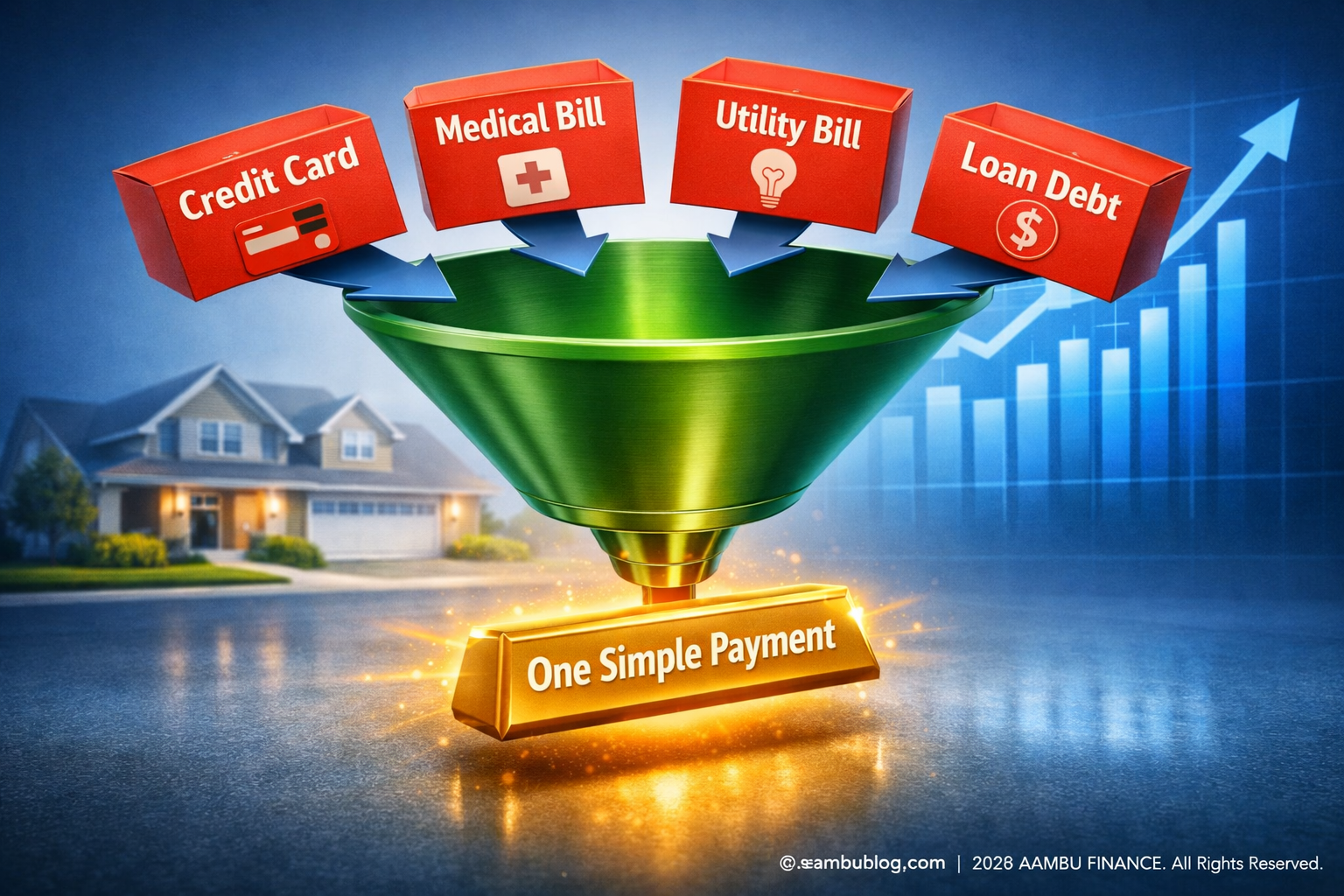
Debt consolidation is the process of taking out one large Personal Loan to pay off all your smaller, high-interest debts.
Instead of five different bills, you now have:
- One Monthly Payment: Easier to track and harder to miss.
- One Interest Rate: Usually much lower than credit card rates (e.g., 8% vs. 22%).
- One Fixed Payoff Date: You know exactly when you will be debt-free (e.g., in 36 months).
The Math Behind the Move
Let’s look at an example. If you owe $10,000 across three credit cards at 24% interest, your monthly interest cost alone is roughly $200. If you take a consolidation loan at 10% interest, your monthly interest cost drops to about $83.
- The Result: You save $117 every month in interest. That money now goes toward paying off the actual debt (the principal) instead of the bank’s profit.
Pros and Cons of Consolidation
The Pros:
- Credit Score Boost: Paying off your credit card balances reduces your “Credit Utilization,” which can spike your score significantly.
- Predictability: Unlike credit cards, where the balance can stay forever if you only pay the minimum, a loan has a clear end date.
The Cons:
- It Doesn’t Fix Spending: If you pay off your cards with a loan but then start spending on those cards again, you will end up with double the debt.
- Fees: Some loans have “origination fees” (1% to 5% of the loan amount). Always read the fine print.
Who Should Get a Consolidation Loan?
This strategy works best if:
- Your credit score is 670 or higher (to get a lower interest rate).
- You have a steady income to make the new monthly payment.
- You are committed to “locking away” your credit cards until the loan is paid.
Conclusion
A debt consolidation loan is a powerful reset button. It simplifies your life and saves you money on interest, but it requires discipline. If used correctly, it is the fastest way to move from “stressed and in debt” to “organized and financially free.”
Frequently Asked Questions (FAQs)
Q1. Will a consolidation loan hurt my credit score? Answer: Initially, a “Hard Inquiry” might drop your score by a few points. However, in the long run, paying off your revolving credit card balances usually results in a much higher score.
Q2. Can I consolidate my student loans with my credit cards? Answer: Technically yes, but it is rarely a good idea. Federal student loans have protections (like income-driven repayment) that you lose if you move them into a private personal loan.
Q3. What is the difference between “Debt Consolidation” and “Debt Settlement”? Answer: Consolidation means paying back everything at a lower rate. Settlement means asking the bank to accept less than what you owe (which destroys your credit score).
Q4. Do I need collateral for this loan? Answer: Most consolidation loans are “Unsecured,” meaning no collateral is needed. However, if your credit is poor, you might need a “Secured” loan using a car or house as collateral.
Q5. How long does the process take? Answer: In 2026, most online lenders can approve you in minutes and deposit the funds into your account within 24 to 48 hours.