

Introduction
Choosing your first credit card in the USA is a significant financial milestone. It is more than just a piece of plastic; it is the foundation of your financial identity. A well-chosen card helps you build a strong credit score, which is essential for renting an apartment, getting an auto loan, or securing a mortgage. In 2026, banks offer many options for beginners, but making the right choice requires a strategic approach.
The Step-by-Step Selection Process
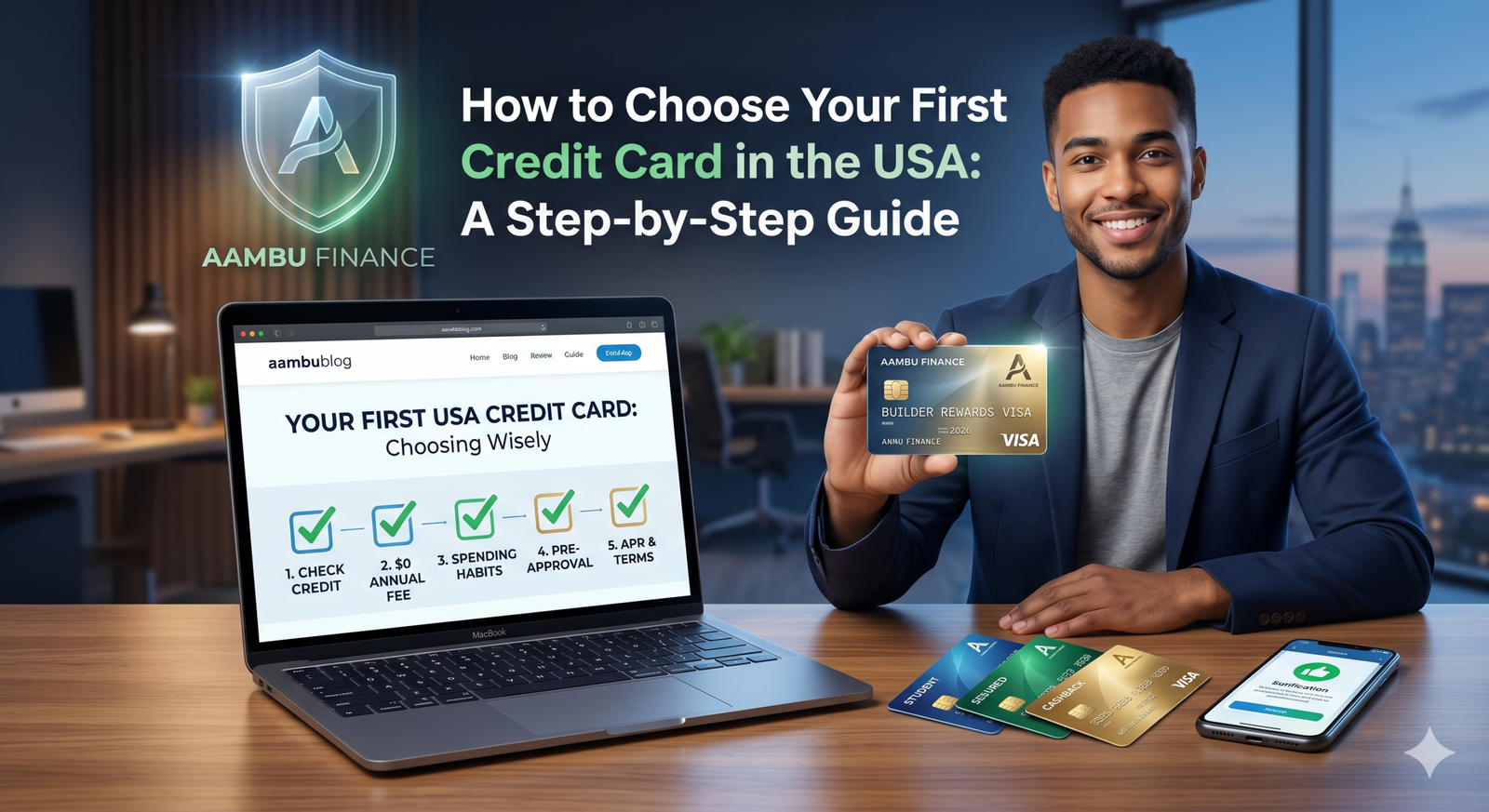
1. Identify Your Credit Standing: If you have no credit history at all, you will likely not qualify for “Premium” rewards cards. Instead, focus on these entry-level options:
- Student Credit Cards: If you are currently enrolled in a college or university.
- Secured Credit Cards: These require a refundable security deposit (e.g., $200) which usually becomes your credit limit.
- Store Cards: Retailers often have lower entry requirements, though they usually have higher interest rates.
2. Prioritize a $0 Annual Fee: As a beginner, you should never pay a fee just to own a card. Since this will be your oldest account, you want to keep it open for decades to build “Credit Age.” A no-annual-fee card allows you to keep the account active for free.
3. Match the Card to Your Spending Habits: Do you spend more on gas, groceries, or dining out? Look for a card that offers Cashback in your highest spending categories. Even a 1% or 2% return is essentially free money back in your pocket.
4. Use “Pre-Approval” Tools: Before submitting a formal application, visit the websites of major banks (like Discover, Capital One, or Amex) and use their “Check for Pre-approval” tools. This allows you to see your approval odds without a “Hard Inquiry” hitting your credit report.
Critical Mistakes to Avoid
- High Interest Rates (APR): Always aim to pay your statement balance in full every month so that the interest rate becomes irrelevant.
- Applying for Multiple Cards: Don’t apply for 3-4 cards at once. Each application triggers a hard inquiry, which can temporarily lower your score.
Conclusion
Your first credit card is a “learning tool.” The primary goal isn’t to accumulate massive rewards but to build a flawless credit profile. Spend responsibly, stay below your limit, and always pay on time.
Frequently Asked Questions (FAQs)
Q1. Can I get a credit card without a Social Security Number (SSN)? Answer: Yes, several banks in the USA allow you to apply using an ITIN or even your passport and I-20 form if you are an international student.
Q2. What should I do immediately after receiving my card? Answer: Activate the card, set up your online banking portal, and immediately enable Auto-Pay to ensure you never miss a payment.
Q3. What is a typical starting credit limit? Answer: For beginners, limits usually range between $300 and $1,000. After 6 months of responsible use, most banks will automatically increase your limit.
Q4. Should I pay the full balance or just the “Minimum Due”? Answer: Always pay the Full Statement Balance. Paying only the minimum will result in high interest charges and can lead to a debt trap.
Q5. Should I ever close my first credit card? Answer: Generally, No. Your first card determines the “Age of Credit History.” Closing it can significantly shorten your history and drop your credit score.