

Introduction
As digital banking becomes the norm in the USA, financial fraud and identity theft are at an all-time high. According to the FTC, Americans lost billions to scammers last year. Protecting your Social Security Number (SSN), bank details, and credit card information is no longer optional—it is a necessity. Here are 7 expert-backed ways to keep your finances safe in 2026.
7 Expert Ways to Stay Safe Online
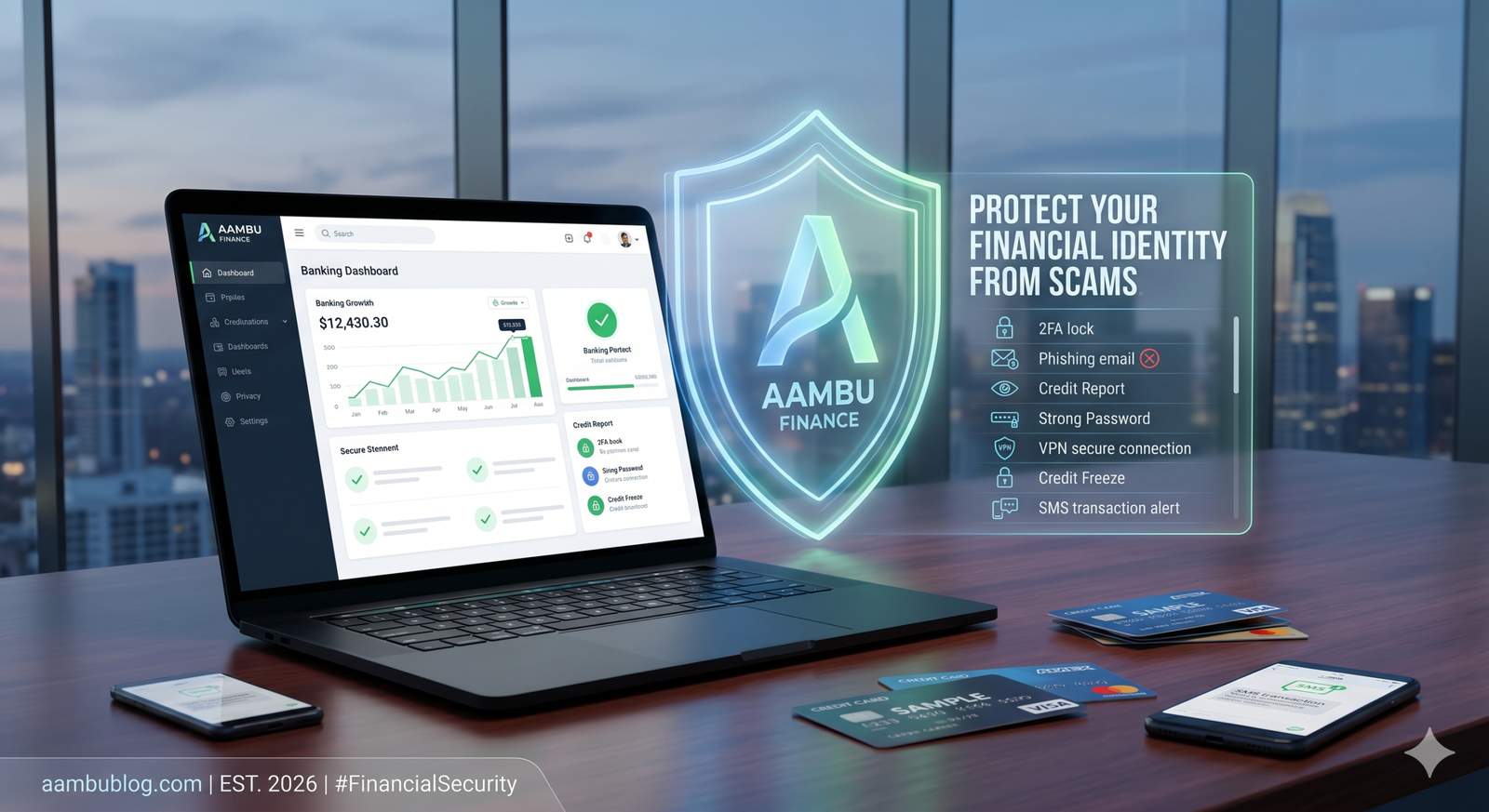
- Enable Multi-Factor Authentication (MFA): Always enable MFA on your banking and investment apps. Even if a scammer gets your password, they won’t be able to log in without the second code sent to your trusted device.
- Beware of Phishing Emails & Texts: Never click on links in messages that ask for your SSN or password, even if they look like they are from your bank. Real banks will never ask for your PIN via email.
- Monitor Your Credit Report Weekly: Use free tools to check for unauthorized accounts opened in your name. Early detection is the key to stopping identity theft.
- Use Strong, Unique Passwords: Avoid using “Password123” or your birth date. Use a password manager to create complex, different passwords for every financial account.
- Avoid Public Wi-Fi for Banking: Never check your bank balance or shop online using coffee shop or airport Wi-Fi. Scammers can easily intercept your data on these open networks.
- Freeze Your Credit: If you don’t plan on applying for a loan soon, “Freeze” your credit with Experian, Equifax, and TransUnion. This prevents anyone from opening new credit lines in your name.
- Sign Up for Transaction Alerts: Set up SMS or email alerts for every transaction over $1. This helps you spot unauthorized charges instantly and report them to your bank.
Conclusion
Protecting your financial identity is an ongoing process. By staying alert and using the security tools provided by your bank, you can stay one step ahead of scammers. Remember, your financial safety is in your hands.
Frequently Asked Questions (FAQs)
Q1. What should I do if my credit card is stolen? Answer: Immediately “Lock” the card in your banking app and call your bank’s fraud department to report it. They will cancel the card and send you a new one.
Q2. Is it safe to save my credit card info on shopping websites? Answer: It is safer not to. If that website’s database is hacked, your card details could be exposed. Always try to use “Guest Checkout.”
Q3. Does my bank ever ask for my full Social Security Number (SSN) over the phone? Answer: No. Legitimate banks will never ask for your full SSN or PIN over the phone or through an unsolicited call.
Q4. Can a VPN help with banking security? Answer: Yes, a VPN encrypts your data, making it much safer to access financial apps if you are not on your home network.
Q5. How often should I change my banking passwords? Answer: It is a good practice to change your financial passwords every 3 to 6 months to ensure maximum security.