

Introduction
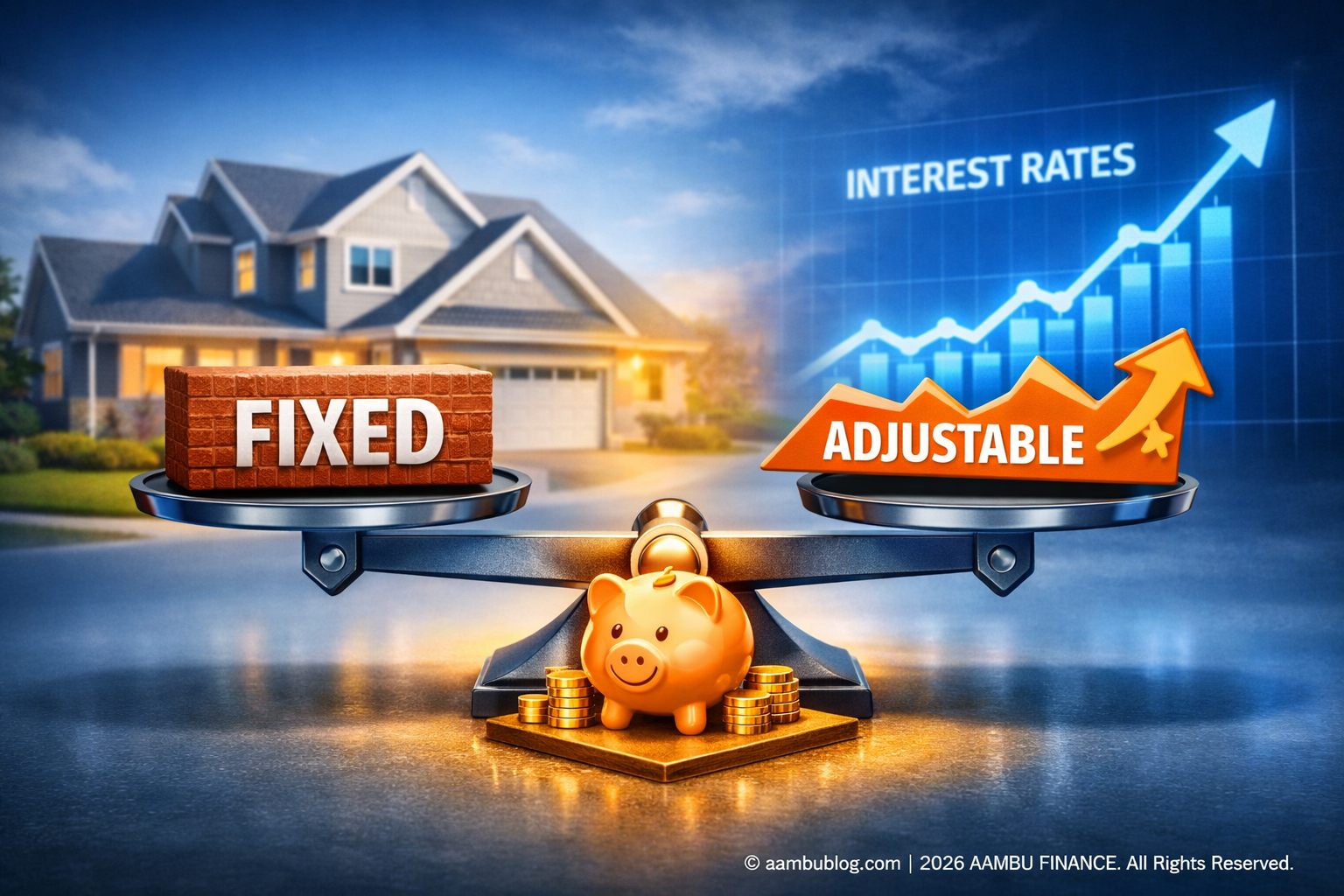
When you apply for a home loan in the USA, you are faced with a critical decision: should you lock in a Fixed-Rate Mortgage or go with an Adjustable-Rate Mortgage (ARM)? In 2026, with interest rates constantly shifting, this choice can save (or cost) you tens of thousands of dollars over the next few decades. Both options have their pros and cons depending on how long you plan to stay in the house and your tolerance for financial risk.
1. Fixed-Rate Mortgages (The Safe Choice)
A fixed-rate mortgage means your interest rate stays exactly the same for the entire life of the loan—usually 15 or 30 years.
- The Pro: Stability. Your monthly principal and interest payment will never change, making it easy to budget for the long term.
- The Con: Initial rates are usually higher than ARMs. You won’t benefit if market interest rates drop unless you pay to refinance.
- Best For: Families planning to stay in their “forever home” for 10+ years.
2. Adjustable-Rate Mortgages (The Strategic Choice)
An ARM usually starts with a lower “teaser” rate for a set period (like 5, 7, or 10 years). After that, the rate adjusts annually based on the market.
- The Pro: Lower initial payments. This allows you to save more money in the early years or qualify for a larger loan.
- The Con: Uncertainty. Once the initial period ends, your monthly payment could jump significantly if interest rates rise.
- Best For: Homeowners who plan to sell or refinance within 5–7 years.
Key Comparison Table
| Feature | Fixed-Rate Mortgage | Adjustable-Rate Mortgage (ARM) |
| Interest Rate | Permanent | Changes after initial period |
| Monthly Payment | Predictable | Can increase or decrease |
| Initial Cost | Higher | Lower |
| Risk Level | Low | High |
The “Caps” in ARMs
If you choose an ARM, pay attention to the Interest Rate Caps. These are legal limits on how much your rate can increase in a single year and over the life of the loan. In 2026, most lenders offer a 2/2/5 cap, meaning the rate can’t go up more than 5% from its starting point.
Conclusion
There is no “one-size-fits-all” answer. If you value peace of mind and want to know exactly what you’ll owe in 2040, go Fixed. If you are a young professional moving for work in a few years, an ARM could save you a small fortune in the short term.
Frequently Asked Questions (FAQs)
Q1. Can I switch from an ARM to a Fixed-Rate later?
Answer: Yes, but you will have to Refinance your loan. This involves new closing costs and an appraisal.
Q2. What is a 5/1 ARM?
Answer: It means your interest rate is fixed for the first 5 years, and then it adjusts once every 1 year for the remainder of the loan.
Q3. Are 30-year fixed mortgages better than 15-year ones?
Answer: 30-year loans have lower monthly payments, but 15-year loans have much lower interest rates and help you own your home faster.
Q4. Do ARMs ever decrease in rate?
Answer: Yes. If the market index (like the SOFR) goes down, your ARM payment could actually decrease during the adjustment period.
Q5. Is “Interest-Only” the same as an ARM?
Answer: No. An interest-only loan is a much riskier product where you don’t pay off any of the debt for several years. Most first-time buyers should avoid these.