

Introduction
When you start your financial journey in the USA, you will quickly encounter two terms: Secured and Unsecured credit cards. While they both look and swipe the same way at a store, they serve very different purposes and have different requirements. Choosing the wrong one can lead to a rejected application and a dip in your credit score. In 2026, banks have made both options more accessible, but which one fits your wallet? Let’s break it down.
What is a Secured Credit Card?
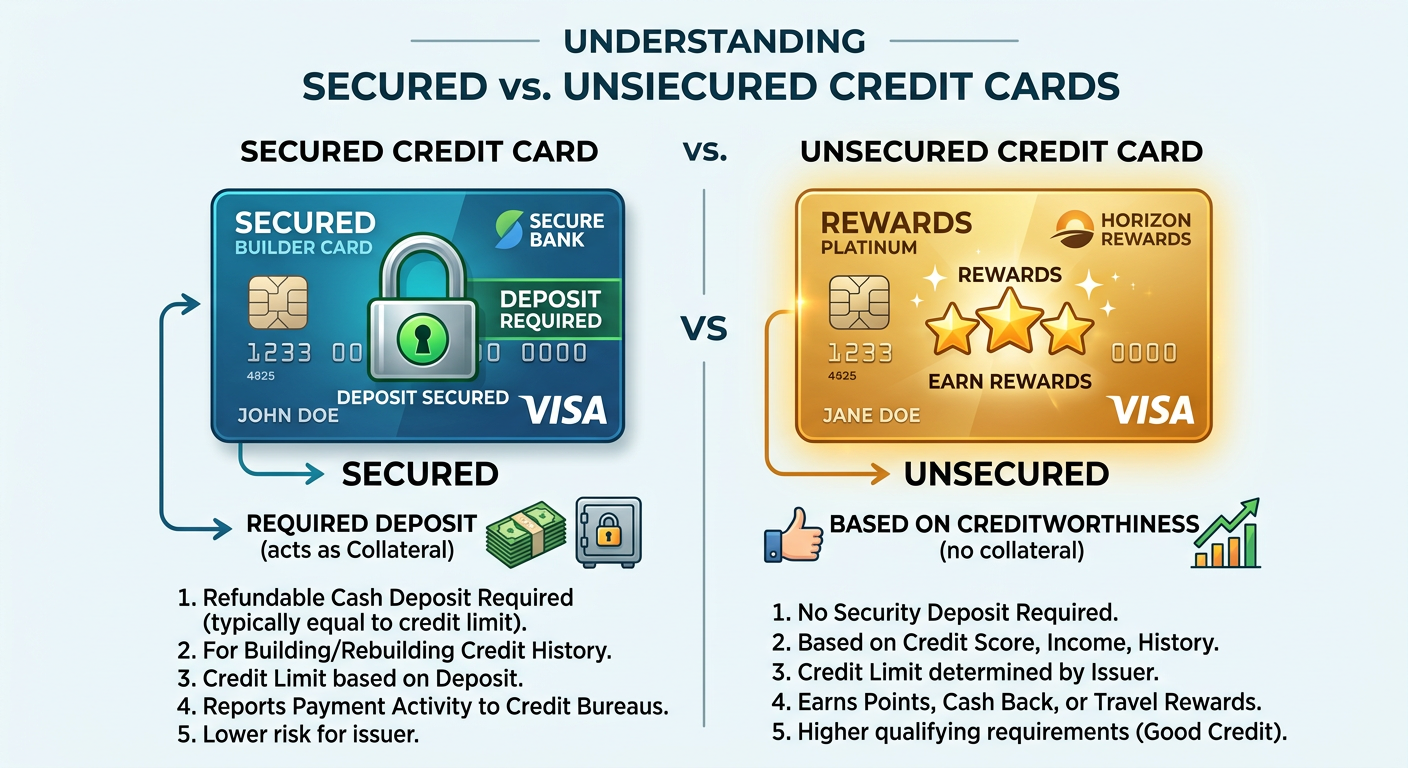
A secured credit card is specifically designed for people with “no credit” or “bad credit.” It requires a security deposit, which usually becomes your credit limit.
- How it Works: You give the bank $200, and they give you a card with a $200 limit.
- The Benefit: It is much easier to get approved. The bank has no risk because they already have your deposit.
- The Goal: Use it for 6-12 months to prove you are responsible, then “graduate” to an unsecured card and get your deposit back.
What is an Unsecured Credit Card?
This is the standard credit card that most people are familiar with. It does not require a security deposit.
- How it Works: The bank looks at your credit history and income, then “trusts” you with a credit limit (e.g., $2,000).
- The Benefit: No upfront cash is required, and these cards usually offer better rewards, cashback, and travel perks.
- The Requirement: You typically need a “Fair” to “Excellent” credit score to be approved.
Key Differences at a Glance
| Feature | Secured Credit Card | Unsecured Credit Card |
| Security Deposit | Required (Refundable) | None |
| Approval Odds | Very High (Easy) | Moderate to Hard |
| Rewards/Cashback | Minimal to None | High Rewards |
| Credit Limit | Equal to Deposit | Based on Income/Credit |
| Who it’s for | Beginners/Credit Repair | People with Credit History |
Which One Should You Choose?
- Choose Secured if: You are new to the USA, a student with no history, or you are trying to rebuild your score after a bankruptcy.
- Choose Unsecured if: You have a credit score above 670 and a steady income.
Conclusion
Neither card is “better” than the other; they are simply tools for different stages of your life. If you are starting from zero, a secured card is your best friend. If you already have a history, an unsecured card is the way to maximize your rewards.
Frequently Asked Questions (FAQs)
Q1. Do secured credit cards help build credit?
Answer: Yes! As long as the bank reports to the three major bureaus (Experian, Equifax, and TransUnion), it will build your credit just as fast as an unsecured card.
Q2. When do I get my security deposit back?
Answer: Most banks review your account after 7 to 12 months. If you have paid every bill on time, they will “graduate” you to an unsecured card and mail you a check for your deposit.
Q3. Can a secured card be declined?
Answer: Yes, but it is rare. Declines usually happen due to a lack of verified income or a very recent bankruptcy.
Q4. Are there any fees for secured cards?
Answer: Look for “No Annual Fee” secured cards (like the Discover it® Secured). Avoid cards that charge monthly maintenance fees.
Q5. Can I use a secured card for online shopping and travel?
Answer: Absolutely. It works exactly like a regular Visa or Mastercard and is accepted everywhere.