

Introduction
In the United States, your credit score is more than just a number—it is your financial reputation. Whether you are applying for a mortgage in New York or a car loan in California, lenders use your FICO score to decide your reliability. But what do these numbers actually mean? Is a 680 score enough for a premium credit card? In this guide, we break down the credit score range chart for 2026 to help you understand where you stand and how to move to the next level.
The FICO Score Breakdown
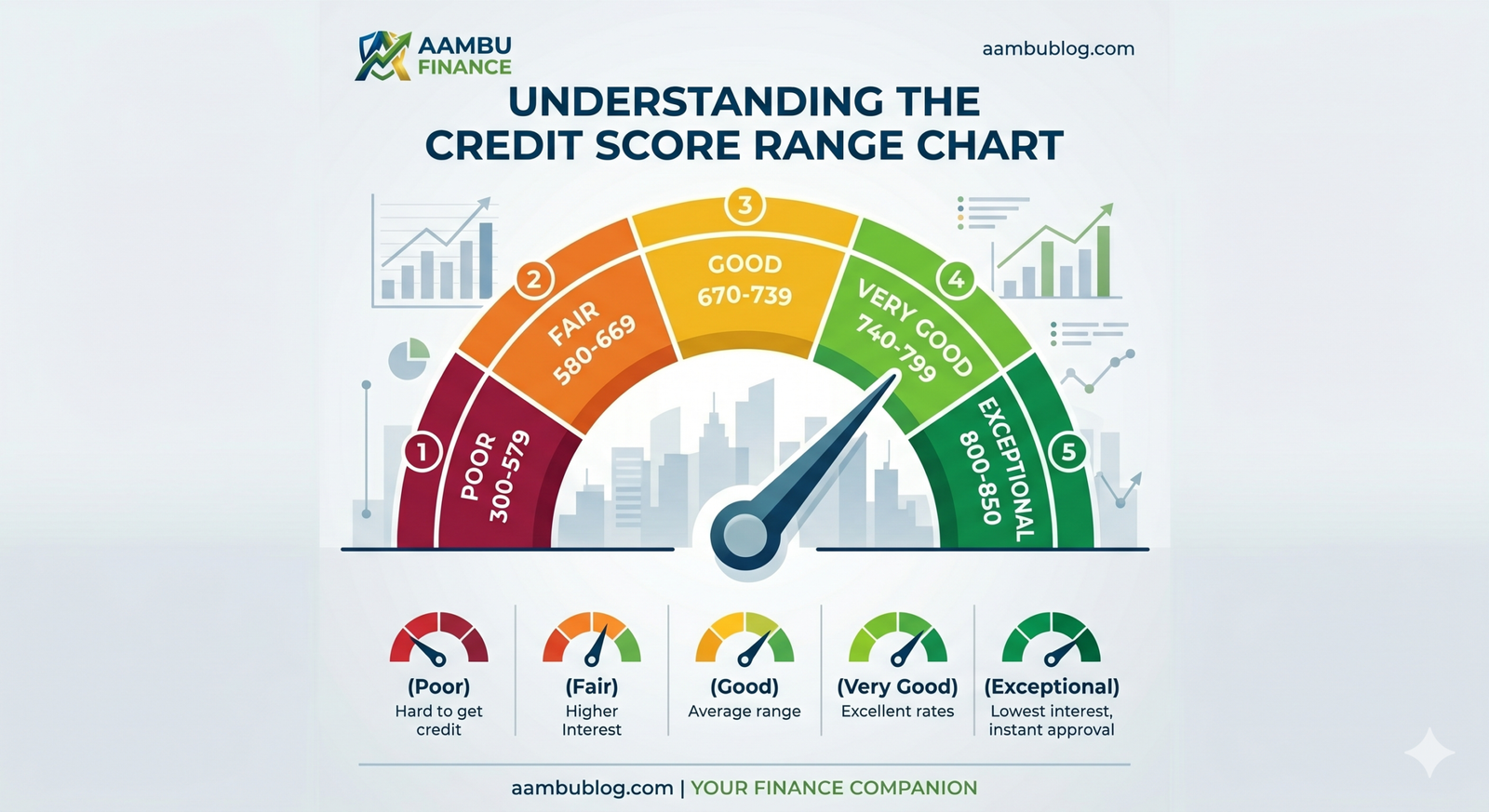
Most lenders in the USA use the FICO model, which ranges from 300 to 850. Here is the official breakdown of those ranges:
| Credit Score Range | Rating | What it Means for You |
| 800 – 850 | Exceptional | You get the lowest interest rates and instant approvals. |
| 740 – 799 | Very Good | Above average; you qualify for nearly every financial product. |
| 670 – 739 | Good | The “Median” range. Most Americans fall here. Good approval odds. |
| 580 – 669 | Fair | Considered a “Subprime” borrower. Higher interest rates apply. |
| 300 – 579 | Poor | Very difficult to get unsecured credit. May need a secured card. |
How Each Range Affects Your Life
1. The Exceptional Range (800-850)
Borrowers in this category are the “Elite.” Banks will compete for your business. You will likely qualify for 0% APR introductory offers on credit cards and the lowest possible mortgage rates, saving you thousands of dollars over time.
2. The Good to Very Good Range (670-799)
If you are in this range, you are considered a low-risk borrower. You will easily get approved for most travel rewards cards and auto loans. However, to get the absolute best “advertised” rates, you should aim to push your score above 740.
3. The Fair to Poor Range (300-669)
Falling into this category means you have some work to do. You might have a history of late payments or high debt. Lenders may ask for a security deposit or a co-signer. Don’t worry—with consistent on-time payments, you can move out of this range within 6 to 12 months.
Conclusion
Understanding the credit score range chart is the first step toward financial freedom. Your goal should always be to stay above the 700 mark. If you are below it, focus on reducing your credit utilization and never missing a payment.
Frequently Asked Questions (FAQs)
Q1. What is considered a “Good” credit score in 2026?
Answer: Any score above 670 is generally considered “Good” by FICO standards. However, for the best loan terms, aim for 740 or higher.
Q2. Can I buy a house with a 620 credit score?
Answer: Yes, some loans like FHA loans allow scores as low as 580. However, your interest rate will be much higher compared to someone with a 750 score.
Q3. How often does my credit score change?
Answer: Your score can update every time a lender reports new data to the credit bureaus (Experian, Equifax, TransUnion), which is usually once a month.
Q4. Does checking my own score lower it?
Answer: No. Checking your own score is a “Soft Inquiry” and does not affect your rating at all. You should check it regularly to monitor for fraud.
Q5. How can I move from “Fair” to “Good” quickly?
Answer: The fastest way is to pay down your credit card balances to below 10% utilization and ensure there are no errors on your credit report.