

Introduction
Entering the world of credit in the United States can be overwhelming. For beginners, the goal is simple: find a card that builds credit history while rewarding daily spending. Cashback credit cards are the perfect entry point because they offer straightforward rewards without the complexity of travel points or miles. In 2026, several banks have launched beginner-friendly options with high approval odds even for those with limited credit history.
Why Start with a Cashback Card?
Cashback cards are “entry-level” essentials. Unlike premium travel cards, many beginner cashback cards have No Annual Fee. This allows you to keep the account open for a long time, which is a key factor in improving your credit score (Length of Credit History).
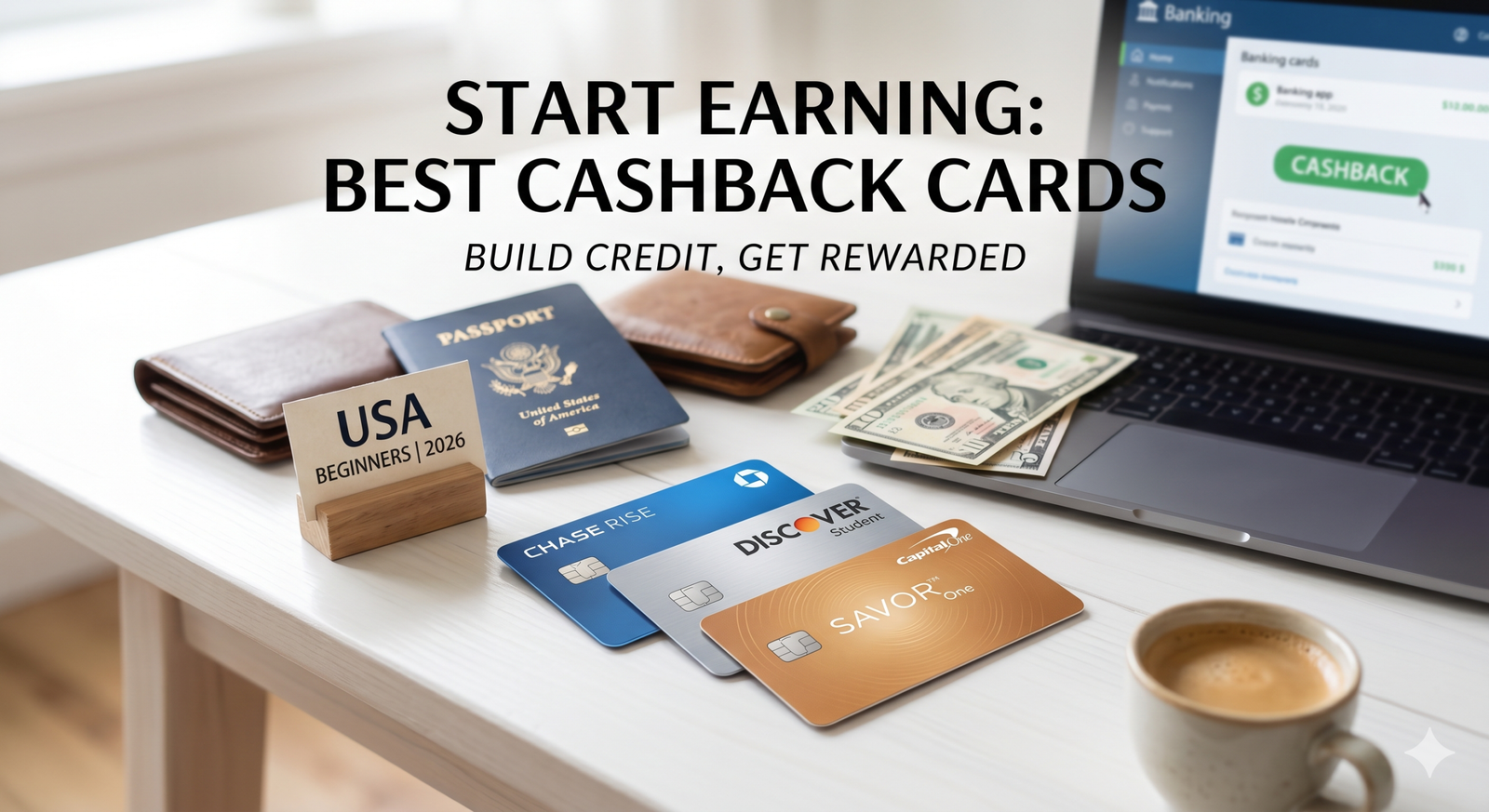
Top 3 Cashback Cards for Beginners in 2026
| Card Name | Cashback Rate | Annual Fee | Best For |
| Chase Freedom Rise℠ | 1.5% on all purchases | $0 | Building Credit |
| Discover it® Student Cash Back | 5% on rotating categories | $0 | Students |
| Capital One SavorOne | 3% on Dining & Groceries | $0 | Food & Entertainment |
1. Chase Freedom Rise℠: The Credit Builder
The Chase Freedom Rise is specifically designed for those new to credit. If you have a Chase checking account with at least $250, your approval odds increase significantly. It offers a flat 1.5% cashback on everything, making it simple to use.
2. Discover it® Student Cash Back
If you are a student, this is arguably the best card. Discover is known for being beginner-friendly and offers “Cashback Match” at the end of your first year, effectively doubling all the cashback you earned.
3. Capital One SavorOne Cash Rewards
For beginners who spend a lot on dining, streaming services, and groceries, this card offers a massive 3% cashback. It is an excellent “lifestyle” card that grows with you as your spending habits evolve.
Expert Tips for Beginners
- Pay in Full: To avoid high interest rates, always pay your statement balance in full every month.
- Keep Utilization Low: Try to use less than 30% of your total credit limit. For example, if your limit is $1,000, don’t spend more than $300.
- Check Your Score: Use free tools provided by your bank to monitor your FICO or VantageScore monthly.
Frequently Asked Questions (FAQs)
Q1. Can I get a cashback credit card with no credit history in the USA? Answer: Yes, several cards like the Chase Freedom Rise and Discover it Student Cash Back are designed specifically for individuals with no credit history. Having a bank account with the issuer can also increase your approval odds.
Q2. Does applying for a credit card hurt my credit score? Answer: When you apply, the bank performs a “Hard Inquiry,” which may temporarily lower your score by a few points (usually 5 points or less). However, in the long run, having a card and paying on time will significantly increase your score.
Q3. What is the “Cashback Match” feature mentioned by Discover? Answer: At the end of your first year, Discover automatically matches all the cashback you’ve earned. For example, if you earned $150 in cashback during the year, Discover will give you another $150, totaling $300.
Q4. Is there an annual fee for beginner cashback cards? Answer: Most top-rated beginner cards, such as the Capital One SavorOne and Chase Freedom Rise, have $0 annual fees. It is highly recommended to start with a no-annual-fee card to avoid extra costs while building credit.
Q5. How much cashback can I realistically earn as a beginner? Answer: On average, beginners earn between 1% and 5% depending on the spending category. While it may not make you rich, it can easily save you $200–$500 per year on regular expenses like groceries and gas.
Conclusion
Choosing the right first card is a milestone in your financial journey in the USA. Start with a “No Annual Fee” cashback card to build a solid foundation. Once your credit score crosses the 700 mark, you can graduate to more advanced travel and premium reward cards.